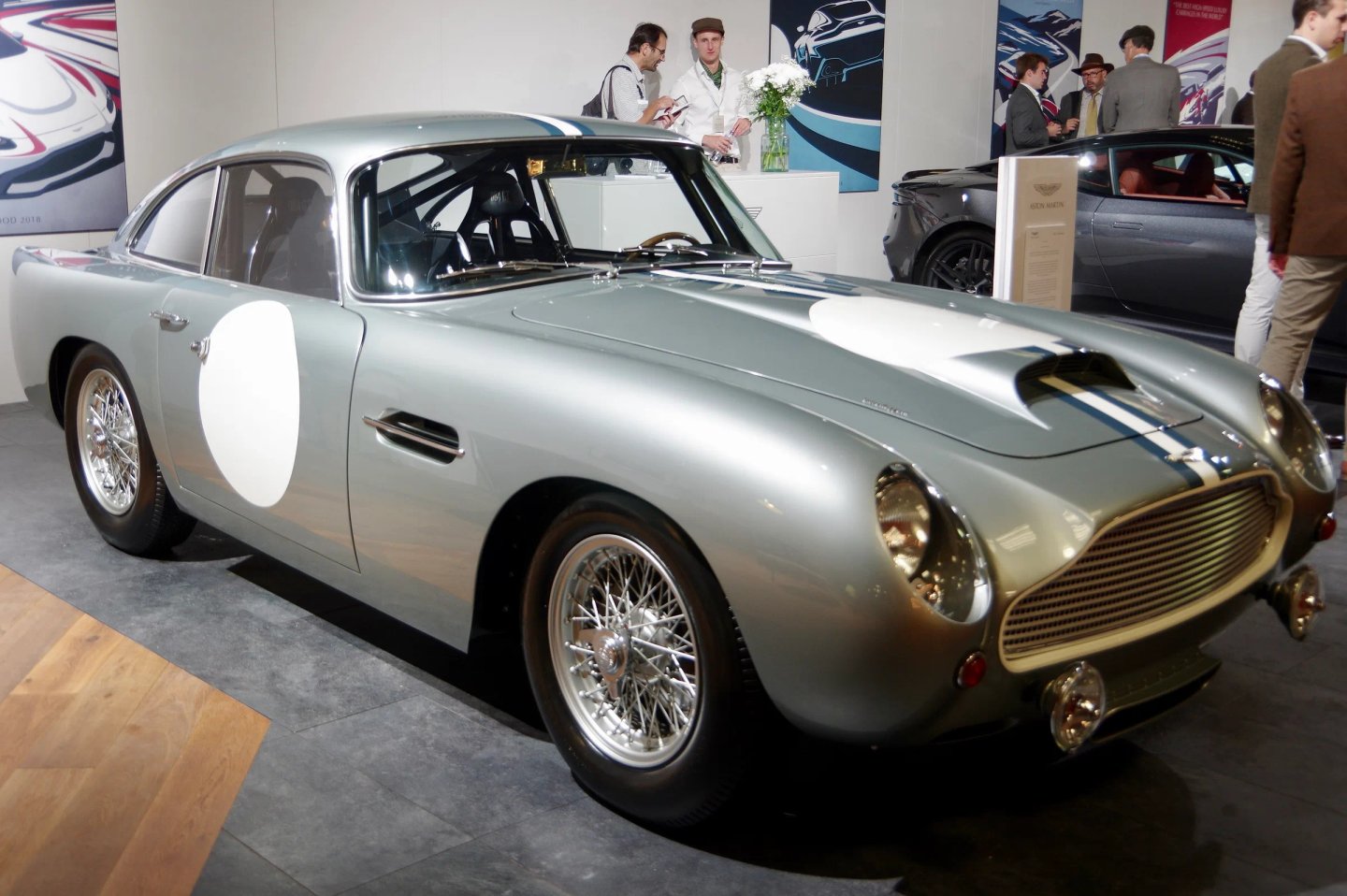
Chassis number DB4/GT/0213/R belongs to an Aston Martin finished in 2018. The numbering picks up the run of the old DB4 GT and starts at 0203/R, as if nothing had happened between 1963 and 2017. RM Sotheby's sold this car in July 2026 for £477,500. New, a car like it cost about £1.5 million.
The trade calls this a continuation: the factory builds an old model again, in a small run, with a number that follows on from the old register. The maker sells the scarcity of its own old cars for a second time. That produces something an ordinary auction result cannot, a way of asking whether the buyer of an original was ever paying for the object or for the number.
Three gaps in the register, one of them real
Jaguar had the best story. Twenty-five XKSS were planned. Sixteen were finished when fire broke out at the Browns Lane factory on the evening of 12 February 1957, and the other nine were lost. In March 2016 Jaguar announced it would build those nine after all, with the chassis numbers of the burnt cars, for more than £1 million each.
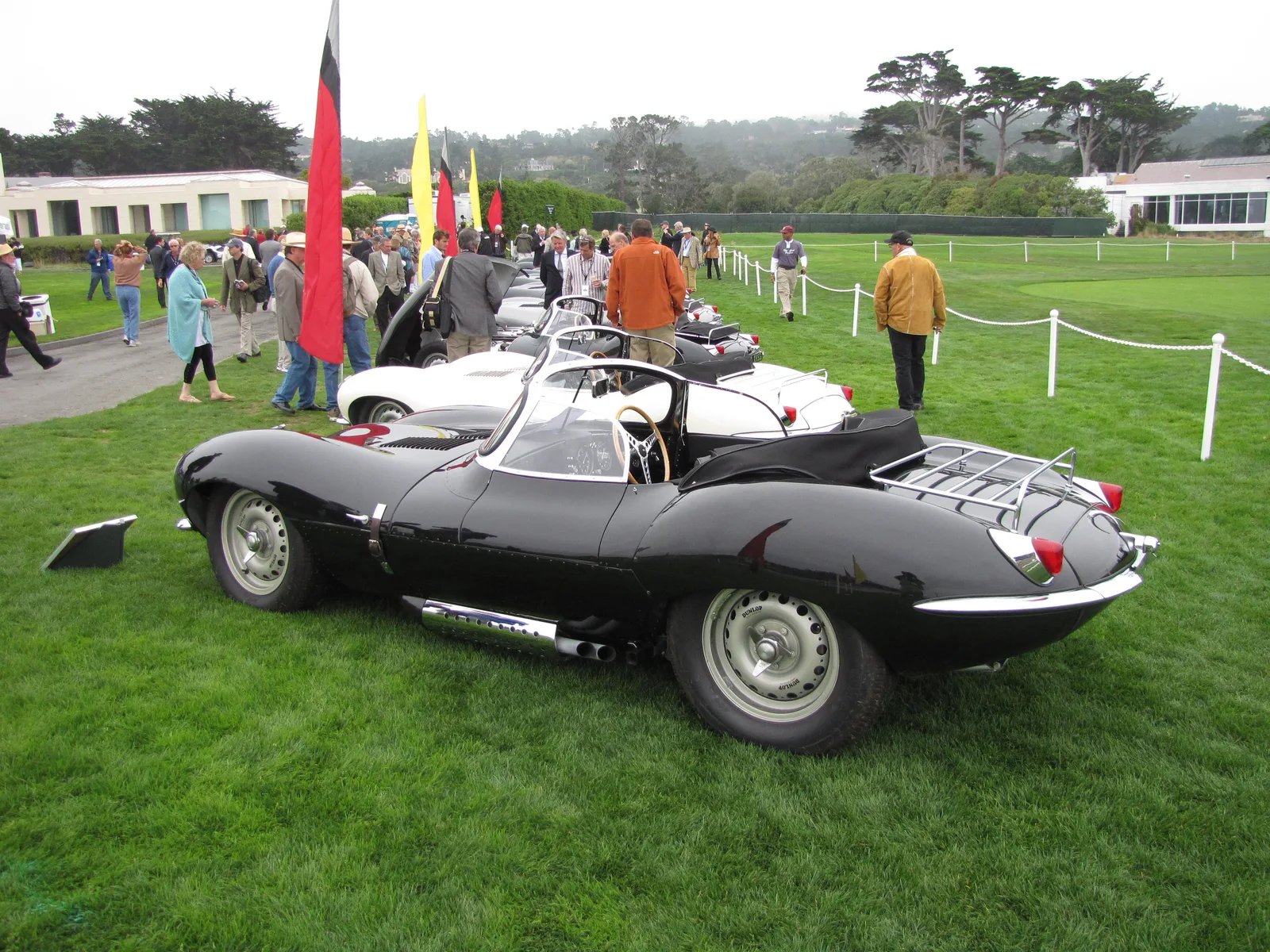
Twelve XKSS gathered at Pebble Beach in 2010, six years before the announcement.
Aston Martin had no gap. It built 75 DB4 GTs between 1959 and 1963 and that was the run. In 2017 it added 25, for the track only.
Bentley had no gap either and went furthest. It took its own 1929 Blower Team Car No. 2 as the pattern and had Mulliner build twelve copies, at about £1.5 million each according to Magneto magazine. The same magazine puts the original at around £25 million.
None of them has an automatic right to the road. Jaguar said in 2016 that it could not register the new XKSS in Britain. The Aston in the first paragraph is catalogued as "bill of sale only", which means no registration. According to Magneto, Bentley delivers the Blower without road approval. An owner can have that dealt with afterwards through a specialist.
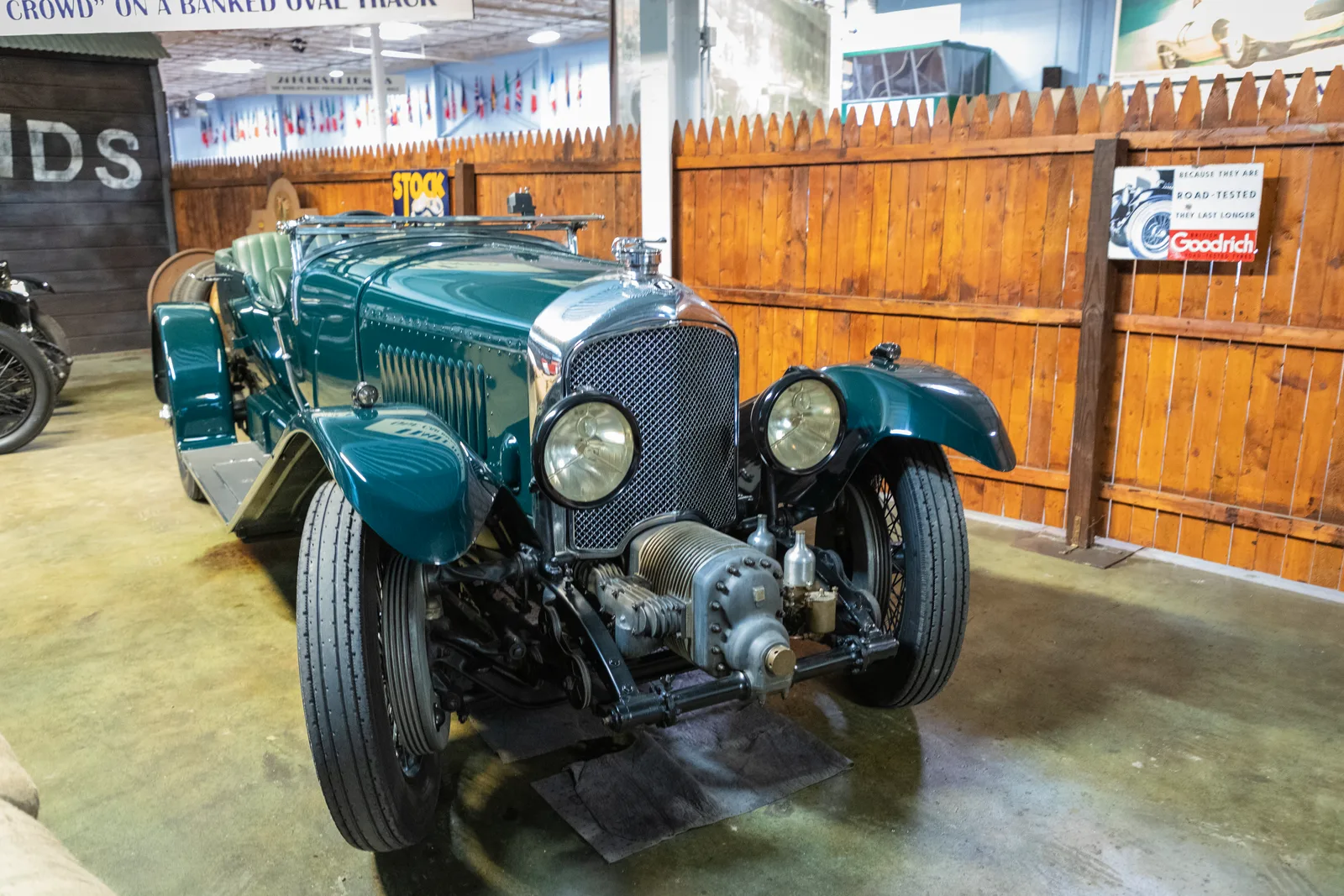
A 1931 Bentley 4½ Litre Supercharged in the Simeone Foundation museum. Not a team car, but the same supercharger ahead of the radiator.
Dilution, or a second class of share
The fear when one of these is announced comes from the stock market. When a company issues new shares, each existing shareholder ends up with a smaller slice of the same business. That is dilution. A factory adding 25 cars to 75 raises the run by a third. Anyone who owned an original had reason to wonder what that would do to their car.
We found no research that measures it, and two sales are not a series. Those two do not point to dilution. In September 2016, a few months before the announcement, a 1960 DB4 GT made £2,408,000 in London. In February 2021 a 1961 DB4 GT sold at Gooding for £2,750,000, above an estimate of £2 million to £2.5 million.
Investors also know shares in two classes: same company, same name, different rights. A continuation looks more like that. The buyer gets the name and the number sequence. They do not get a registration, a racing record or any previous owners. A second class of that kind need not take anything from the first.
What the car costs without its past
The price of a classic normally cannot be split. There is metal in it and there are sixty years in it, and nobody can say how much of each. A continuation is the nearest thing this hobby has to a control group. The same shape, the same maker, an engine reproduced from CT scans of original blocks. Only nothing has happened to it yet.
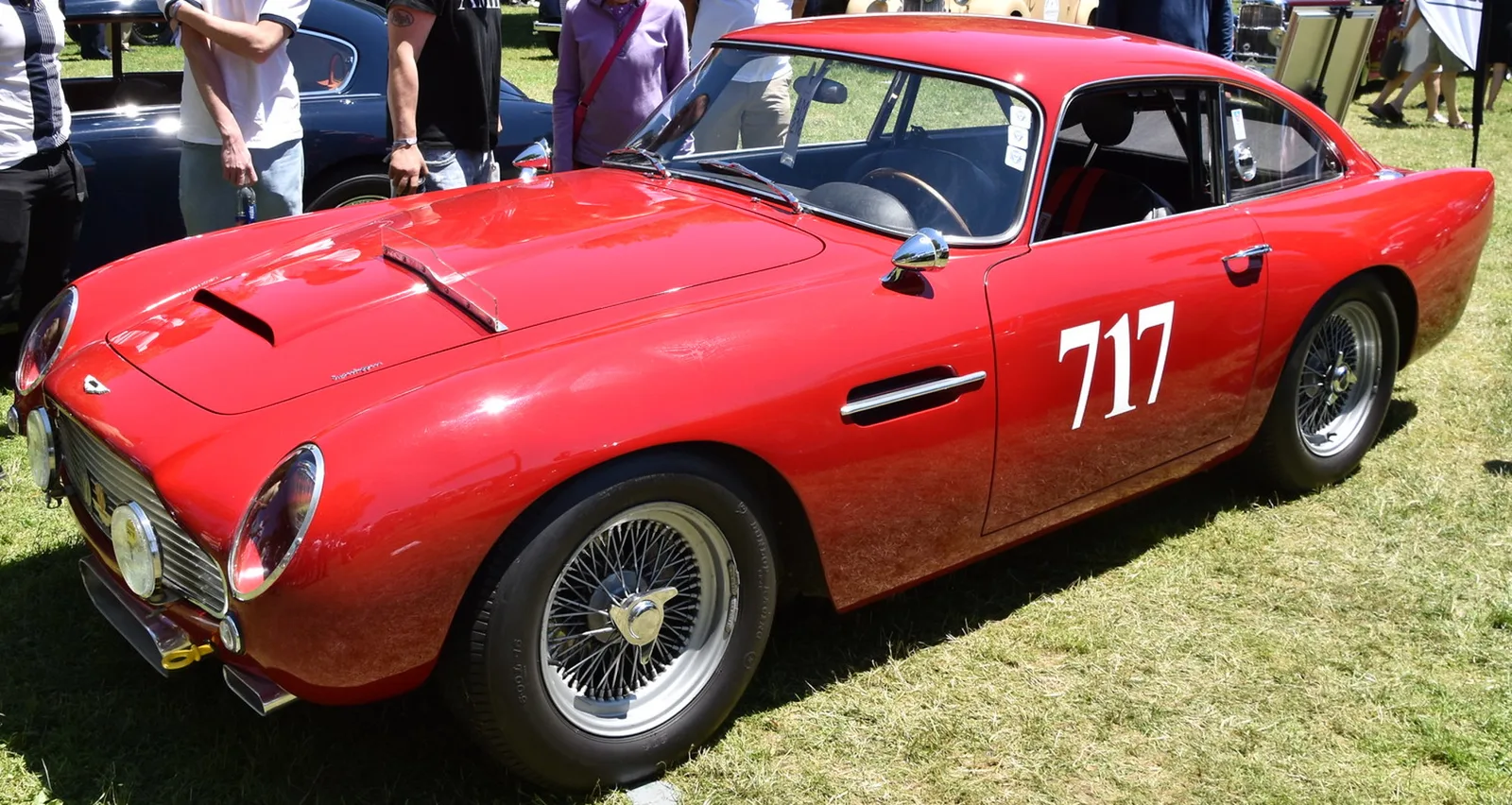
DB4 GT 0175/L of 1961 at a concours in Greenwich, June 2022. One of the 75 from the original run.
The sum for the Aston. Original, February 2021: £2,750,000. Continuation, July 2026: £477,500. A prototype with $147,000 of modifications made $907,000 in January 2026, about £673,000. One price tracker lists another sale on Bring a Trailer in September 2026 at the equivalent of £747,000, which we could not check at source. Take £477,500 to £747,000 and the gap to the original is £2.0 million to £2.3 million. Between 73% and 83% of the price is then not in the object.
That sum is crude. The sales are five years apart. The original can use the road and the continuation in this form cannot, and a registration is worth money too. How much, we do not know.
The bill landed with the continuation's buyer. Twenty-five cars at £1.5 million is £37.5 million of revenue for Aston Martin. The car in the first paragraph lost about two-thirds of its new price in eight years.
That leaves the number.
If buyers were paying for that, Jaguar should have had it easy, because the nine XKSS carry the numbers of cars that really were on the list. In October 2020 one of them made $1,985,000 at RM Sotheby's. Sports Car Market put an original at about $10 million at the time. That is a fifth. The Jaguar did roughly hold its new price, which the Aston did not. Nine cars against 25, a better story, a different year: one car cannot separate those.
That makes our own title too broad. A central bank that prints money makes all existing money worth less. These factories printed something else, the shape and the number. Together those carry little more than a quarter of an original's price at most, and the rest they left alone. For the owner of an original that is harder news than dilution. Most of their money is in something that is not on the lift, and a restorer can destroy that part but cannot make more of it.
Images: 2018 Aston Martin DB4 Continuation (45120320881) by David Merrett from Daventry, England (CC BY 2.0); Jaguar XKSS by TheOMDude (CC BY-SA 4.0); 1931 Bentley 4½ Litre Supercharged Tourer 01 by Al R (CC BY-SA 2.0); 2022 Greenwich Aston Martin DB4 GT 0175 by Charles (CC BY 2.0). Images resized.


