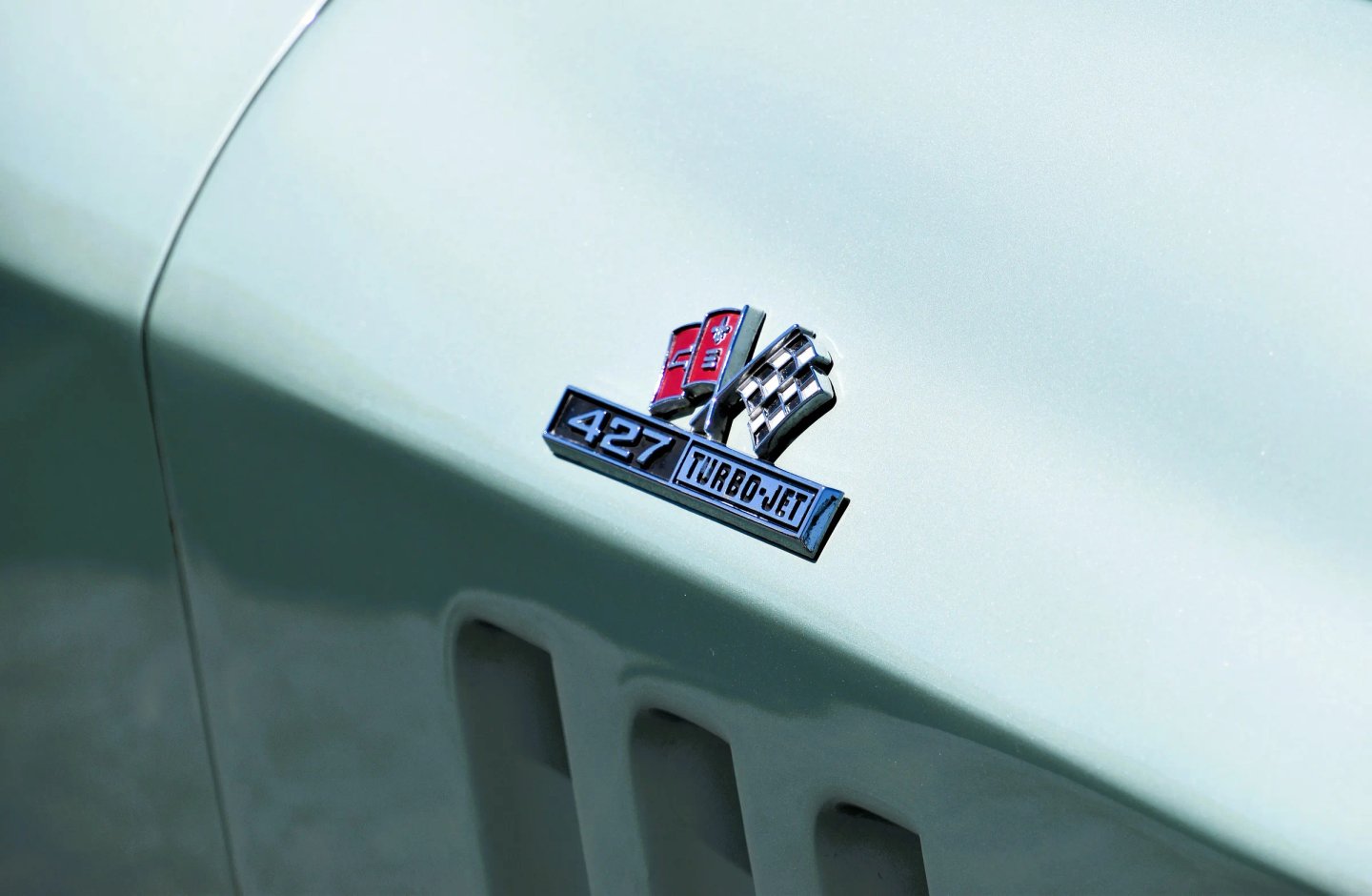
Mid America Motorworks sells two-ounce bottles of paint in colours such as Bright Inspection Green and Spindle Orange. They are for the chassis of a Chevrolet Corvette, and they protect nothing. At the St. Louis plant, somebody used a colour like that to put a daub across a bolt once it had been torqued or checked. Anyone restoring a 1963 to 1967 C2 now puts that daub back.
Eckler's, another supplier, sells complete kits by model year for about $200: a stencil matched to the VIN and build date, ink, crayons for shims and engine codes, inspection paint in the right colour. That is a market for something that used to be a by-product. To see why it exists, look at who hands out the points.
What the judges measure
The National Corvette Restorers Society scores cars out of 4,500 points. A Top Flight award takes 94%, so a car may lose 270. The standard is in the manual: the car as it was at final assembly, in the state it reached after normal preparation by a Chevrolet dealer. Each component starts as perfect against that standard, and any difference comes off, including a difference upwards.
A modern paint shop delivers a better finish than St. Louis managed in 1965, and that counts as one of those differences. On the NCRS forum, members describe how judges deal with that: orange peel and overspray are expected where they were usual for the year, and checking for over-restoration is a separate step. One member who had dulled the door jambs but forgot the drip rails under the bonnet later got a note about an over-restored fuel door.
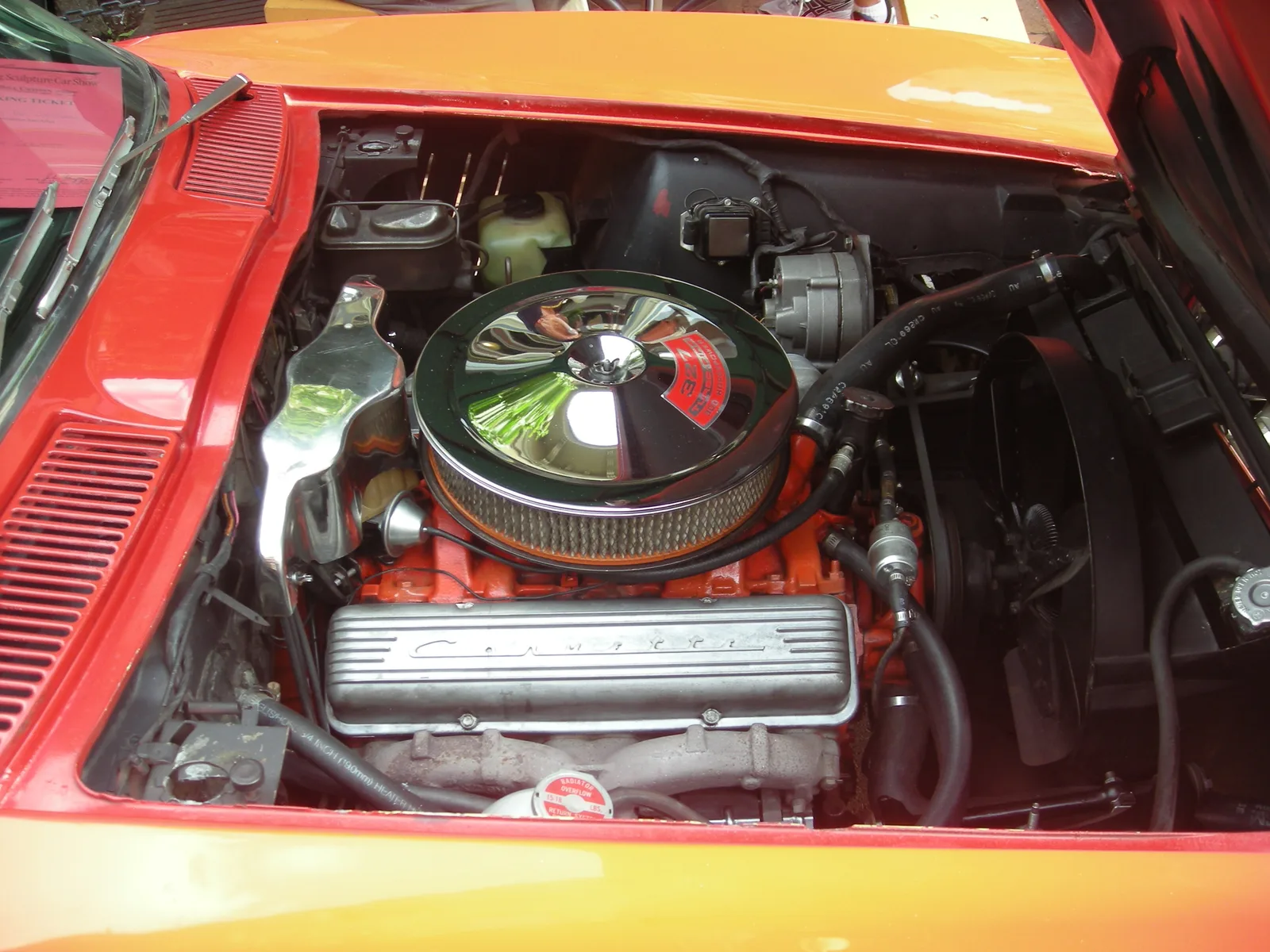
The engine bay of a 1967 Corvette at a show in Ann Arbor in 2014.
A 2019 seminar for judges in Northern California puts it like this: orange peel must match from front to back, but not necessarily from side to side, because the hand applying it was not always consistent. The mistake of a person on a given shift has become a specification.
Why that is not stupid
It is easy to laugh at this. The rule has a reason, though. 'As good as possible' is no standard, because it has no end: any restoration can be sprayed better once more, and the judges would be ruling on taste. 'As it left the factory' can be checked. Two teams in two states can hold the same car against the same list. The buyer gets a verdict that can be compared, and the verdict lasts: RM Sotheby's sold a 1967 427/390 for $121,000 and still cited its 2006 Top Flight in the catalogue, with the 94.8 score and the judging sheets. That is 234 lost points, and somebody thought them worth mentioning.
Nor is the idea purely American. FIVA, the world body for historic vehicles, says in its concours guidelines that points can be lost for over-restoration, for example when parts are chromed that were not chromed at the factory. And the NCRS itself says an original car in lesser condition can score as well as a restored one, or better.
What such a score adds at sale, we do not know. We found no comparison of like cars with and without an award, and the NCRS itself says it gives no warranty as to the authenticity of any car it judges.
When the measure becomes the aim
The economist Charles Goodhart observed in 1975 that a statistical relationship tends to collapse once someone starts steering by it. He was talking about monetary policy. The best-known wording comes from the anthropologist Marilyn Strathern: when a measure becomes a target, it ceases to be a good measure.
Look at that daub. In 1965 it carried information: someone had checked this bolt. On a restored car it says the restorer knows where the daub belongs. The bolt may be perfectly tight, but the paint no longer tells you so.
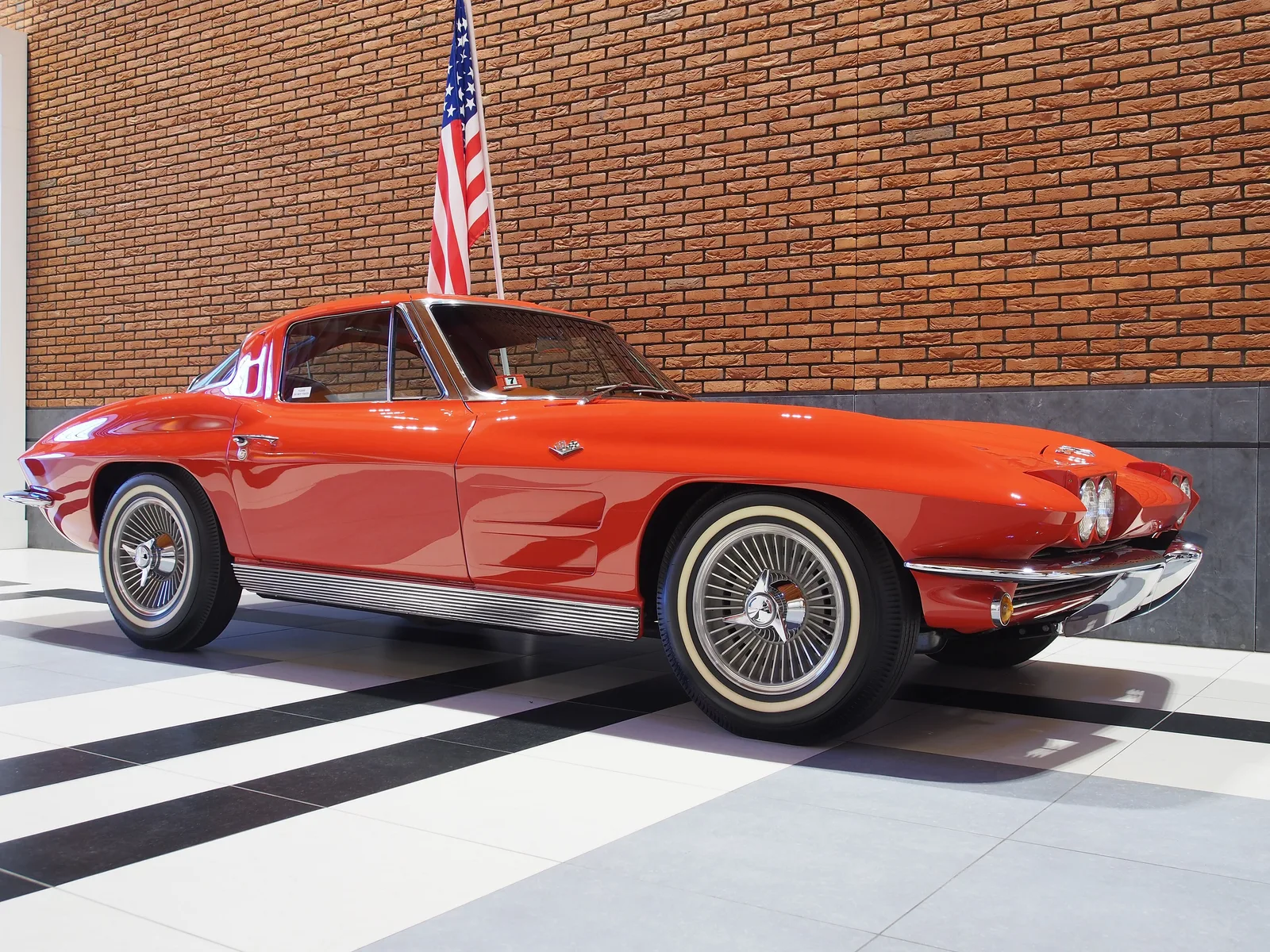
A 1963 Corvette Sting Ray Split Window at the Louwman Museum in The Hague.
The variation goes as well. A former judge wrote on the same forum that the position of chassis marks wandered with the time of build and the shift at work. For early cars, the supplier advises using photographs of untouched examples. According to another member, people spend hours re-creating marks that some cars still have. If everyone follows the same guide, the marks on a restored field end up tidier and more even than they ever were on the line. That is our reasoning, not a measurement. It does fit what one member wrote about overspray: when he applies it, he tries to make it neat and uniform.
Overspray cost Chevrolet nothing. It happened because nobody was paid to mask. Now somebody earns an hourly rate to put it on, and some members refuse, even at a cost in points. They own a car with paint that is too good and live with the deduction.
What is original about it
Three things can be called original. The drawing: what the engineers meant. The day: how this one car drove out of St. Louis. The years: everything that has happened to it since. The judges choose the day, but that day has gone. They work from what is known about production, and that is an average. So a restored car with good daubs does not resemble one car on one day. It resembles the average.
The NCRS manual also defines counterfeit: imitating something with the intent to deceive. A car judged counterfeit goes into the database. An engine stamping that does not match the factory stamp sets costs points. The daub does not. It is an imitation too. The judge knows the car has been restored, so the judge is not deceived. The buyer twenty years on sees only an orange spot on a bolt in a photograph of the chassis.
If the restorer torqued the bolt personally and then applied the daub a worker in St. Louis applied to show the job was done, what is original about it, apart from the colour?
Images: Chevrolet Corvette Sting Ray 427 Coupé (C2, 1965) (53768804896) by Charles from Port Chester, New York (CC BY 2.0); 2014 Rolling Sculpture Car Show 23 (1967 Chevrolet Corvette engine) by Michael Barera (CC BY-SA 4.0); 1963 Chevrolet Corvette Sting Ray Split Window 250hp 5.4 liter V8 184kmh pic5 by Alf van Beem (public domain). Images resized.


