The shipment was 22,700 litres. That is how much synthetic petrol went from the Haru Oni plant in the south of Chile to Europe for the 2026 Porsche Supercup season, according to the producer HIF Global. An average Dutch filling station sells that much petrol in a little over a week.
That says nothing about what the stuff can do. Three questions get mixed up when people talk about e-fuel and classics, and they have three different answers.
Does it work, is it allowed, is it there
Does it work? Probably. Porsche has the petrol refined to the European EN 228 standard, the same as for ordinary petrol. We found no long-running test on old engines, but on paper it is petrol.
Is it allowed? That was never the issue. The EU's 2035 rule concerns new cars. A classic car already on the road falls outside it, with or without e-fuel. The rule itself keeps moving. In December 2025 the Commission proposed going from a 100% to a 90% CO2 cut. On 22 October 2026 two European Parliament committees voted for 95%, with a further 7.5 points of room through green steel. The environment committee, the full Parliament and the Council were still to come. For a classic the outcome makes no difference.
Is it there? No. The plan when it was announced was 130,000 litres a year for the pilot plant, then 55 million and then 550 million. Reports first attached the years 2024 and 2026 to those, and later 2025 and 2027. In June 2026 HIF writes that it is developing large projects in five countries, without dates. The Haru Oni petrol it reports on goes to Porsche's race cars and events. Even the original 130,000 litres is small. The Netherlands bought about 2.2 billion litres of petrol in the first half of 2026, some 8,400 litres a minute. A whole year of the pilot plant is a quarter of an hour of Dutch petrol.
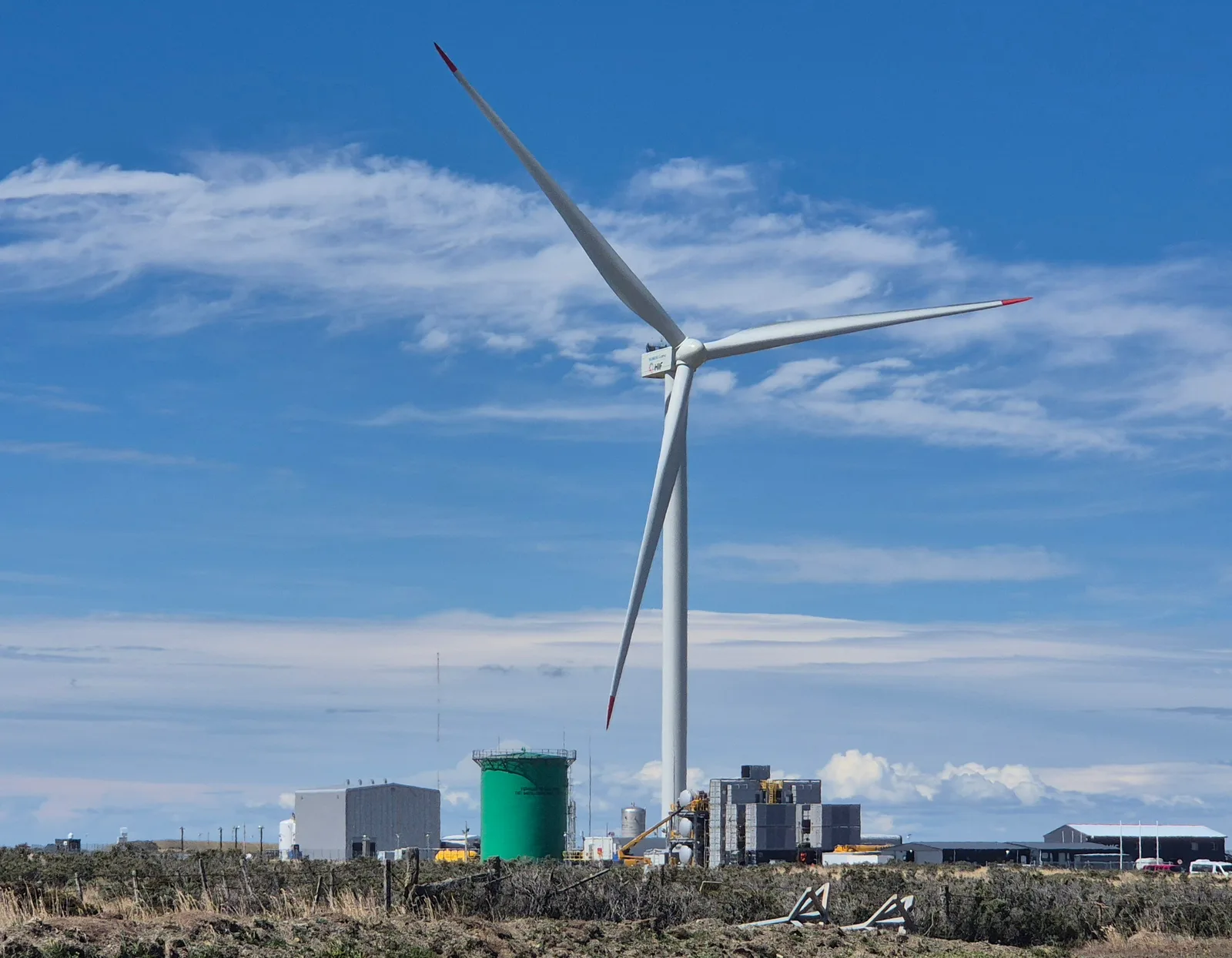
Haru Oni in the south of Chile on 30 January 2026, with the wind turbine and the plant beneath it.
Why the price per litre does not decide it
The usual objection is the price, and it applies least of all to classics. Say e-fuel costs €10 a litre, over four times the Dutch pump price. A classic covering 2,000 km a year and burning 10 litres per 100 km needs 200 litres. That is €2,000 instead of about €450. Annoying, and in the same order as a year of storage. For a commuter it is out of the question. For someone who drives on Sundays it is one more expensive line on a list of expensive lines.
So the classic is the one customer able to carry such a price. Dearer fuel for it already exists. In June 2023 Coryton was selling Sustain Classic in Britain at £3.80 to £5.24 a litre, when ordinary super unleaded cost about £1.60. That is biofuel from agricultural waste and not e-fuel, but a person could actually buy it. In one place, near Oxford.
The volume need not be as large as for the whole fleet either. The 55 million litres in the original plan would be enough for 275,000 cars using 200 litres a year. If that plant ever comes, it is a drop for the cars on the road and perhaps sufficient for the classics. But then the petrol still has to reach the owner, which brings us back to that single outlet near Oxford.
When the pump stops paying
In June 2026 the Netherlands had 4,084 filling stations, 16 fewer than a year earlier. BOVAG, the Dutch trade body, expected 2,750 by 2040 if electrification continues at this pace. Dirk Mulder of ING puts it at about 2,000 within five to ten years. The first to go, he says, are border stations without a shop. So litres alone already fail to pay for the site in some places. Mulder puts it down to the capacity to invest: an owner who loses that falls behind and then closes or sells. So a pump does not close on the day it starts losing money. It closes on the day something needs replacing and the owner says no.
In itself that is no disaster for a classic. It fills up perhaps five times a year and does not need 4,000 stations. It needs one within half a tank. A director from the sector said in March 2026 that 3,000 would already be enough.
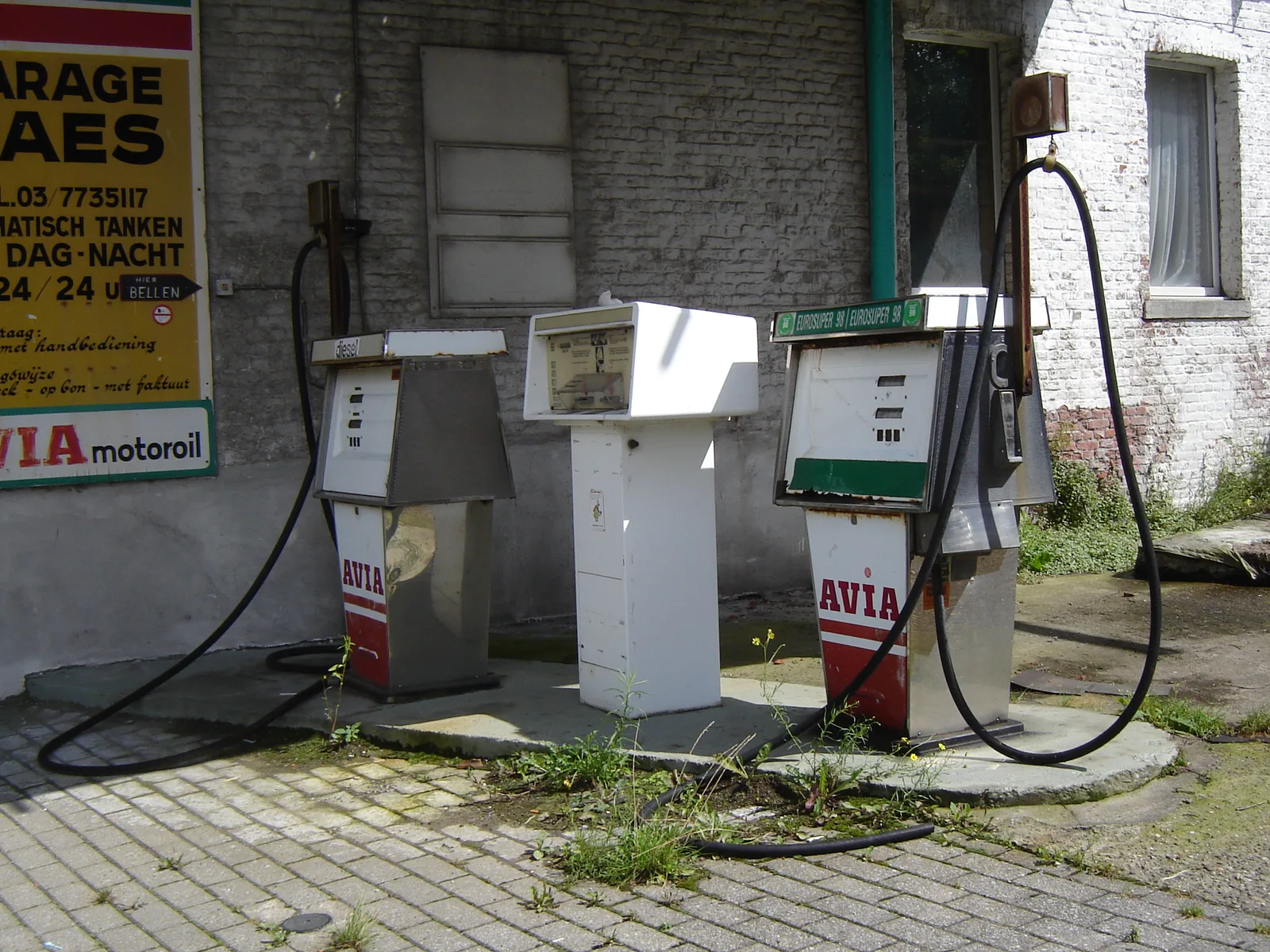
Disused pumps at a garage in Doel, Belgium, not far from the Dutch border.
The Netherlands has also seen how a shrinking fuel disappears. In September 2021 fewer than 100,000 cars ran on LPG, according to BOVAG and the data firm RDC. In early 2022 about 935 stations still sold it, against over 1,100 in 2010. That is one pump for every hundred or so cars, and no pump lives on that. LPG survived because it rode along on a site where petrol paid the bills.
Petrol will have no such host. Once petrol becomes the sideline, something else has to pay for the site: the shop, the fast chargers. And the shop is under pressure too, with a ban on selling tobacco on the way. An average Dutch station now sells about 3,000 litres of petrol a day. Somewhere lower down is the volume at which the owner decides that the last tank, with its permit and its inspections, is no longer worth it.
That number is in no report we could find, and it will differ from place to place. E-fuel changes little about it, because it can only go into whichever tank is still there. Nobody knows how many customers buying 200 litres a year it takes to keep that tank open. The sum will probably get done only on the day that tank is due for replacement.
Images: Dudok tankstation op een dieplader onderweg van de oorspronkelijke locatie afslag Vinkeveen rijksweg A2 naar het Autotron in Rosmalen. - Rosmalen - 20420341 - RCE by Rijksdienst voor het Cultureel Erfgoed (CC BY-SA 4.0); 20260130 Haru Oni by Ildottoreverde (CC BY-SA 4.0); Doel - Abandoned petrol station 1 by LimoWreck (CC BY-SA 3.0). Images resized.


