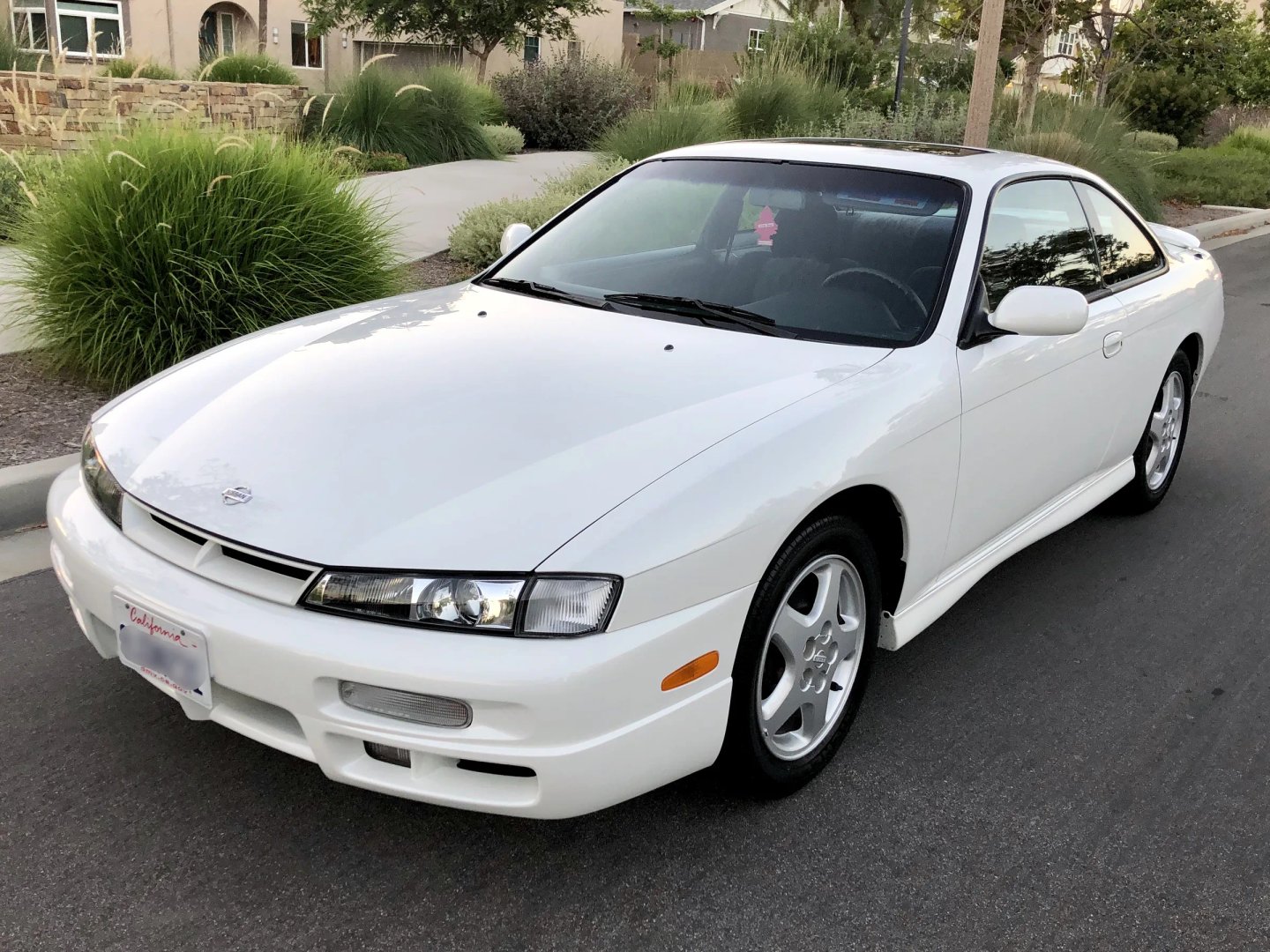
The best argument for the comment section under an online auction is a 1995 Nissan 240SX showing 590 miles. It went live on Bring a Trailer on 24 March 2022. Within eight minutes the first doubts were in the comments, The Drive reported later. The rest followed: rust on the radiator brackets and in the spare wheel well, overspray underneath, welds on the core support that did not look factory. The VIN plate on the dash was held by plastic push-pins where rivets should be. Commenters wondered whether an airbag had once gone off behind it.
No inspector would have been there in eight minutes, and none would have done it for free. So it is tempting to call the comment section the best pre-purchase inspection there is. That gives it too much credit. Comments are evidence of uneven quality, and what they are worth depends on how you read them.
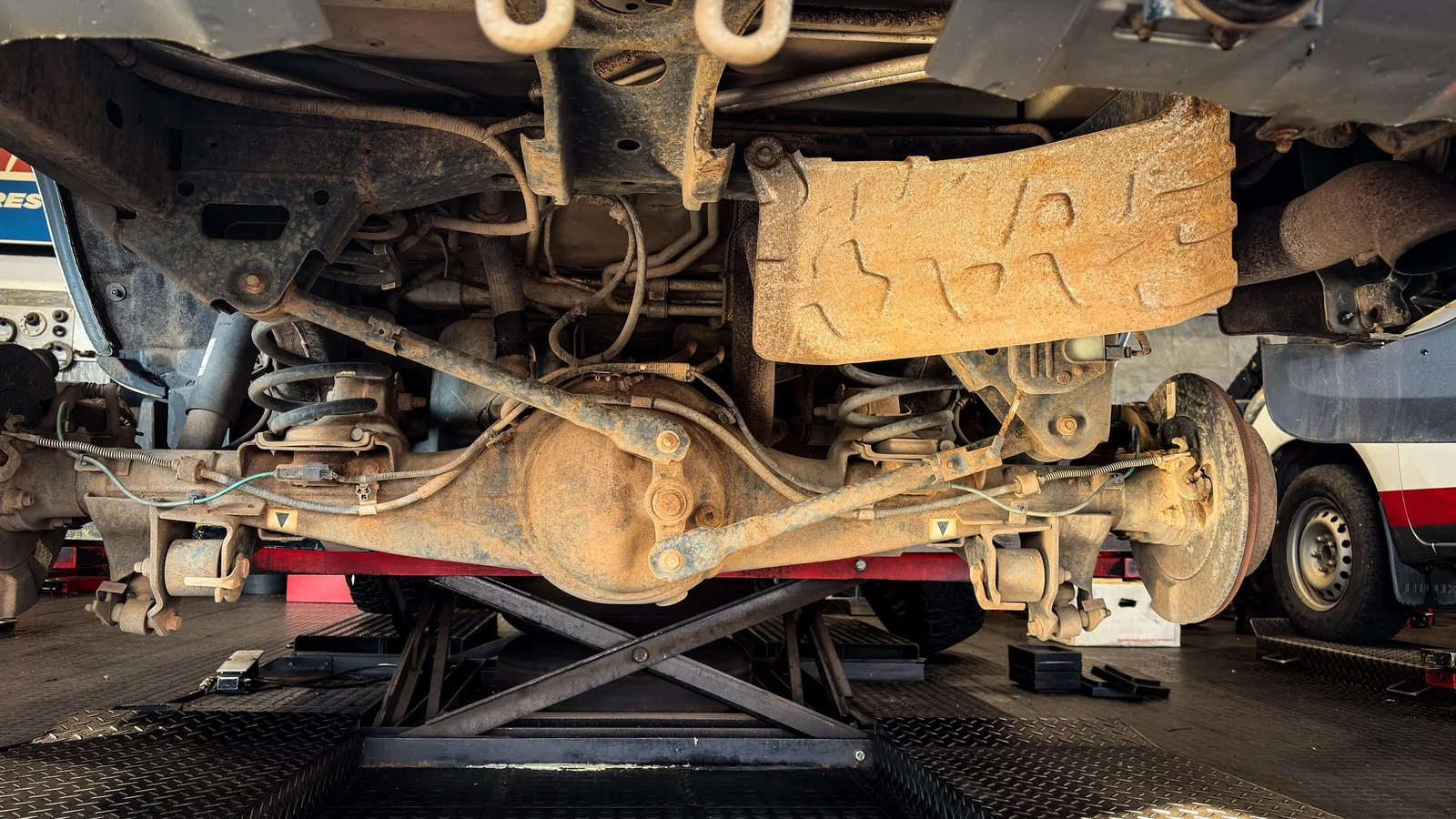
Rust underneath, on a lift in a workshop. The rust on the 240SX could be seen in the photos in the listing.
When a crowd gets it right
In 1907 Francis Galton published in Nature the result of a contest at a livestock show in Plymouth. 787 visitors estimated the dressed weight of an ox. The middle estimate was about 1,207 lb and the actual figure 1,198. Under 1% out.
That result has a condition attached. Everybody filled in their own card. Under an auction the opposite happens: whoever comments has first read what is already there.
What that does has been measured. In 2013 Lev Muchnik, Sinan Aral and Sean Taylor published an experiment in Science, run on a news site with comments. They gave 4,049 new comments one artificial up-vote straight away and 1,942 others one down-vote. After that single up-vote, the chance of another positive vote was 32% higher and the final score averaged 25% higher. Down-votes behaved differently: other readers corrected them. This was a news site, so for cars it is a translation and not a measurement. The direction is clear enough. An early enthusiastic comment counts for more than it deserves.
Who is commenting
At a livestock show you guess for yourself. Under a car, the commenters are sellers, dealers, people who plan to bid and people with the same model at home. A bidder gains from doubt. An owner gains from a high price. A seller can join in under another name. Buyers seem to know this: a study of about 42,000 auctions from 2015 to 2023 found that they give more weight to comments from bystanders than to those from the seller.
That last one is not theory. On 25 March a user called Pilatus bid $19,427 on the 240SX. A day later commenters pointed out that Pilatus owned the business behind the car: he had once signed his own name to a comment under a Honda Del Sol. On 28 March Bring a Trailer withdrew the auction for shill bidding, meaning bidding on your own car. The man confirmed to The Drive that he was Pilatus. He said he had bid to get the auction taken down, after his request to remove it was refused.
Note the order of events. The comments about rust were up on the first day, and the auction carried on. Bring a Trailer added to the description on 25 March and declined to stop. What ended the auction was a bid. Commenters supply evidence. They do not decide anything about the car, and nobody is obliged to act on what they say.
How to weigh a comment
The useful distinction is whether a comment points at something you can check yourself. "That plate should be riveted" can be looked at in the photo and compared with another 240SX. "This generation always rusts" is a general statement. "You are paying too much for this" is an opinion, and sometimes a bidding tactic. Only the first costs the writer anything, because if they are wrong everyone can see it. Economists call the rest cheap talk: claims that cost nothing and cannot be verified.
Under a 1974 Alfa Romeo 2000 Spider in 2026, a commenter said that an invoice in the listing had not come from the named workshop and had been altered. That could be checked as well. According to The Autopian, Bring a Trailer withdrew the auction roughly eighteen hours later, citing unresolved concerns about the seller.
Research points the same way. Anton Ivanov and two colleagues looked at 13,451 Bring a Trailer listings and found that helpful comments improved auction results, by narrowing the information gap between buyer and seller. The writer's reputation had a less consistent effect. It is one conference paper, so it is no more than a pointer. It is still a reason to read what a comment says and not go by the name above it.
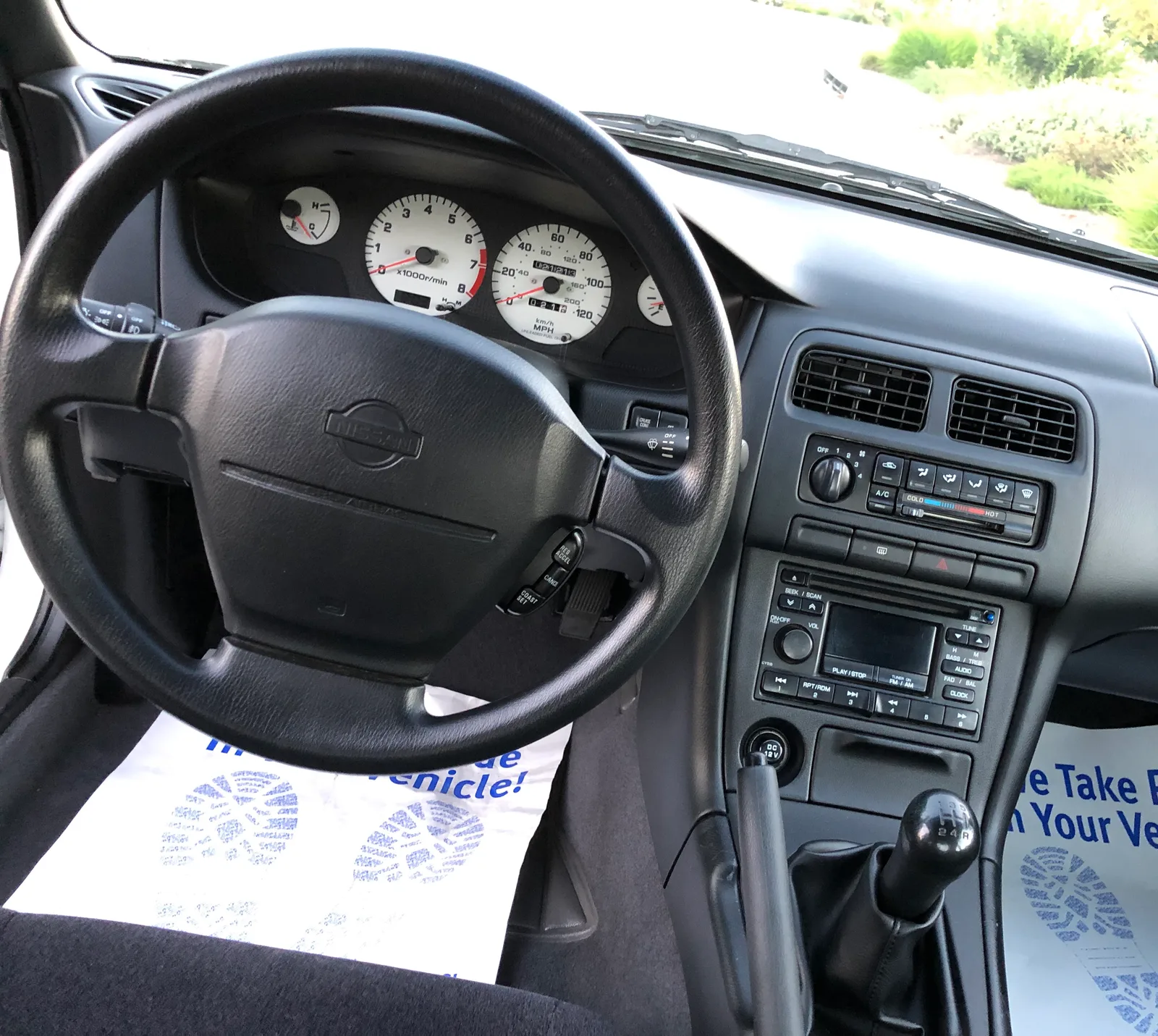
The interior of a Nissan 240SX of the S14 generation. This is not the car from the auction.
What the crowd cannot see
A comment section inspects the listing. The car is somewhere else. Nobody feels third gear, smells the coolant or puts a paint meter on the roof. The commenters under the 240SX had photos of the underside to look at, and a forum of S14 owners reading along. That is why it worked.
Take those two away and little is left. On a rare model there may be a handful of people who know what an original VIN plate looks like, and they need not be looking that week.
At Octane buyers can also ask questions in public and comment during the auction, so all of this applies there too. A comment is a lead to follow up. It does not change what a buyer still has to check.
The risk that remains lies in the silence. A comment section full of compliments feels like a car that has passed, when all it says is that nobody found anything in the photos on offer. The rarer the car, the fewer people can say anything about it and, as a rule, the more money is at stake. How often that goes wrong, nobody counts. An auction where nobody spotted anything does not make the motoring press.
Images: Nissan 240SX S14 1 by Leg1t (CC BY 2.0); Photo by Magda Ehlers on Pexels; Nissan 240SX S14 interior by Leg1t (CC BY 2.0). Images resized.

