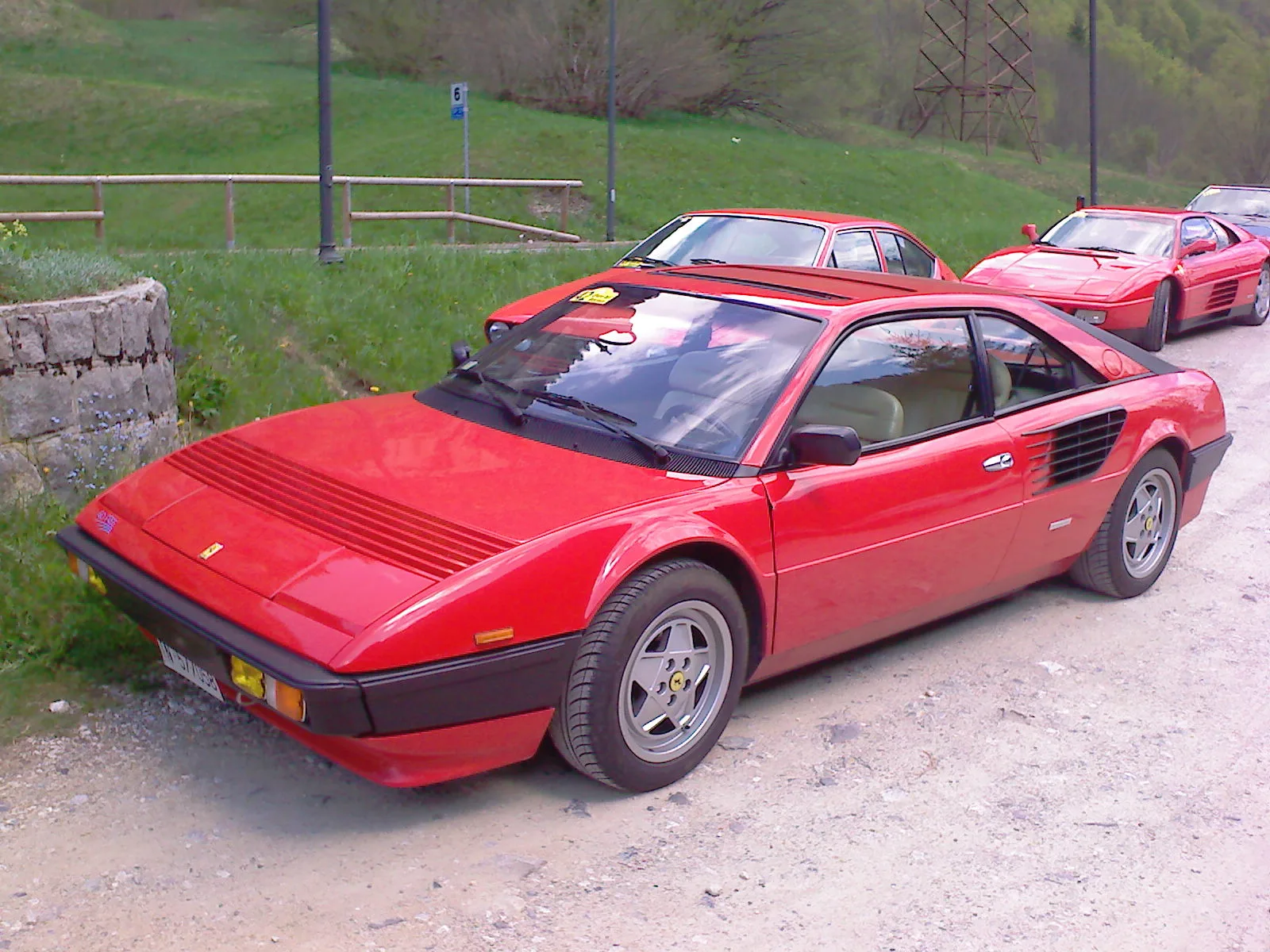
Two rubber cam belts run inside the V8 of a Ferrari Mondial 8. They need replacing every five years whether or not the car moves, because a snapped belt takes the engine with it. In July 2026 the Spanish site Motor16 put that job at about €7,500 if nothing else turns up, and the car itself at €23,000 to €28,000. Asking prices often run higher. Sports Car Market quotes $5,000 or more for the later Mondial 3.2.
So every five years, a quarter to a third of the car. The usual explanation follows from that: this is the cheapest Ferrari because it is so expensive to keep, and whoever buys one hands the discount back to a specialist over time. That explanation is half right. Which half depends on what you park it next to.
What a fixed bill does to a price
Take a flat on leased land, which is common in London and Amsterdam. Two identical flats, one freehold, one paying a yearly rent on the ground beneath it. The second is cheaper and it is no bargain. The buyer pays less to the seller and more to the landowner. If the market adds up properly, the price gap equals the present value of all the rent still to come: what you would need to set aside today to cover it. Investors call this capitalising a cost.
On a Mondial 8 the sum runs like this. Use €6,000 per belt service, between the two figures above. That is €1,200 a year. A fixed €1,200 a year is worth €30,000 at 4% interest (1,200 divided by 0.04). At 6% it is €20,000. The rate is an assumption, and the sum counts only the belts: no tyres, no electrics, no accidents.
A €25,000 Mondial 8 is then a €55,000 commitment. €25,000 goes to the seller now and €30,000 goes to a workshop over the years.
An owner who sells after five years pays for only one service, of course. To them the sum looks overdone. But the next buyer does the same arithmetic and takes the coming services off their bid. That is why the discount stays in the price, whoever has the car.
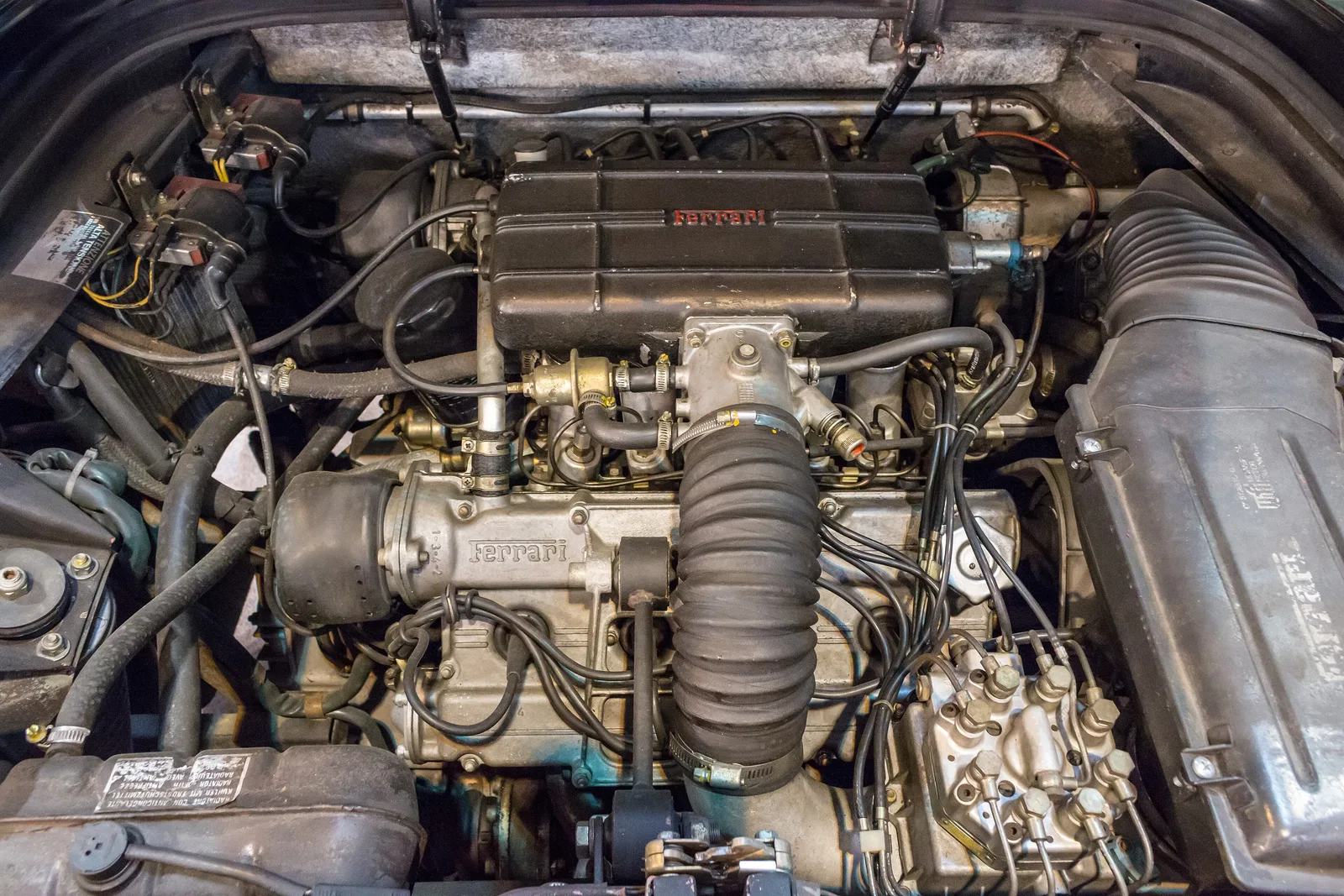
The V8 (type F106B) of a Mondial 8 at Techno-Classica in 2018. The belts can be changed with the engine in the car.
The Mondial 8 shares its engine with the 308 GTBi. On the 8, the QV and the 3.2 the engine stays in for this job. On the later Mondial t it has to come out, according to Motor16. That car starts at €55,000.
The same belts in a 328
If the bill explains the price, a Ferrari with the same bill should cost roughly the same. That car exists. The Mondial 3.2 and the 328 arrived together in 1985 with the same 3.2-litre V8 of 270 PS. Auto Motor und Sport wrote in December 2025 that most Mondials are advertised at €40,000 to €50,000. European adverts on 3 November 2026 had 328 GTS models at €82,500 to €149,500. Those are asking prices on both sides, so the ratio says more than the amounts.
The owner of the 328 gets the same invoice, on top of the tens of thousands they paid extra. So the bill does not explain this gap. Neither does scarcity. Ferrari built 1,797 Mondial 3.2s and 7,412 328s, which makes the cheaper car four times as rare. Of the Mondial 8, the cheapest of the lot, there are 703.
That leaves what buyers want to own. They pay for the two-seater and not for the four-seater on the longer wheelbase, and that preference appears on no invoice. Next to a 328, then, the Mondial's discount is not prepaid servicing. It is a discount on the shape.
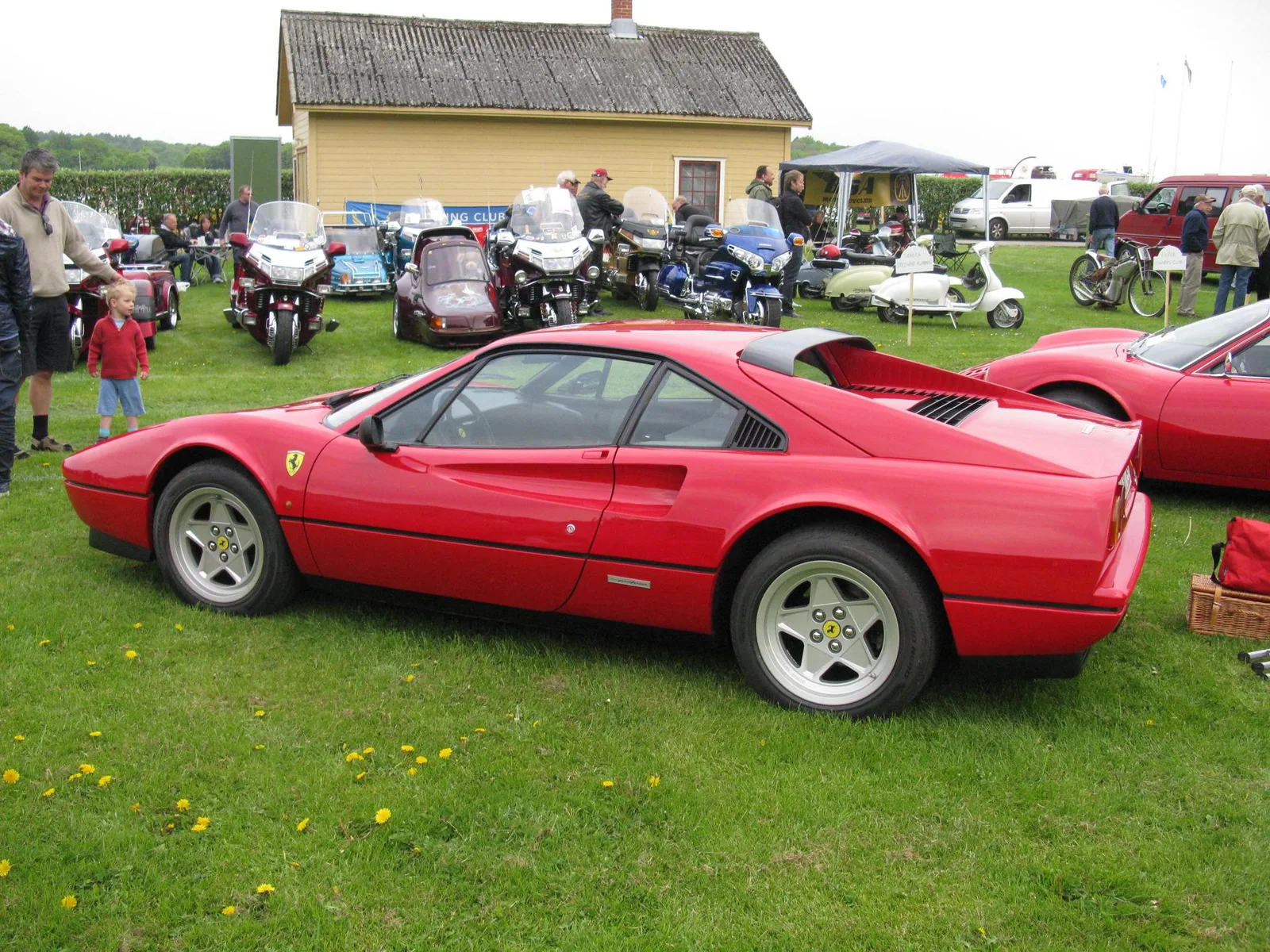
A Ferrari 328 GTB: the same 3.2-litre V8 as the Mondial 3.2, two seats and a much higher price.
Counting the belts does shrink the gap. A Mondial 8 against a €100,000 328 is a factor of four on the price tag. Add €30,000 to both and it becomes €55,000 against €130,000, a factor of 2.4.
So there are two comparisons with two answers. Put a Mondial next to a 328 and the buyer gets a discount: the same bill and tens of thousands less to the seller. Put it next to other €25,000 cars and the buyer is paying in instalments. Motor16 names the Porsche 996 as a car in the same price band. A 996 has timing chains. It has troubles of its own, but this line is not in its budget.
The 400i has a different bill
The other candidate for cheapest Ferrari is the 400i, and the leasehold sum does not work there. The V12 has a chain, not belts, so there is no five-yearly job to add up. On 8 December 2025 Bonhams sold a 1984 400i online for £21,952: automatic, 67,516 miles, mechanically sound according to the description, bubbling and corrosion on the rear wings and boot lid, MOT expired half a year earlier. The lowest sale since 2020 is £11,500, at RM Sotheby's on 12 June 2024.
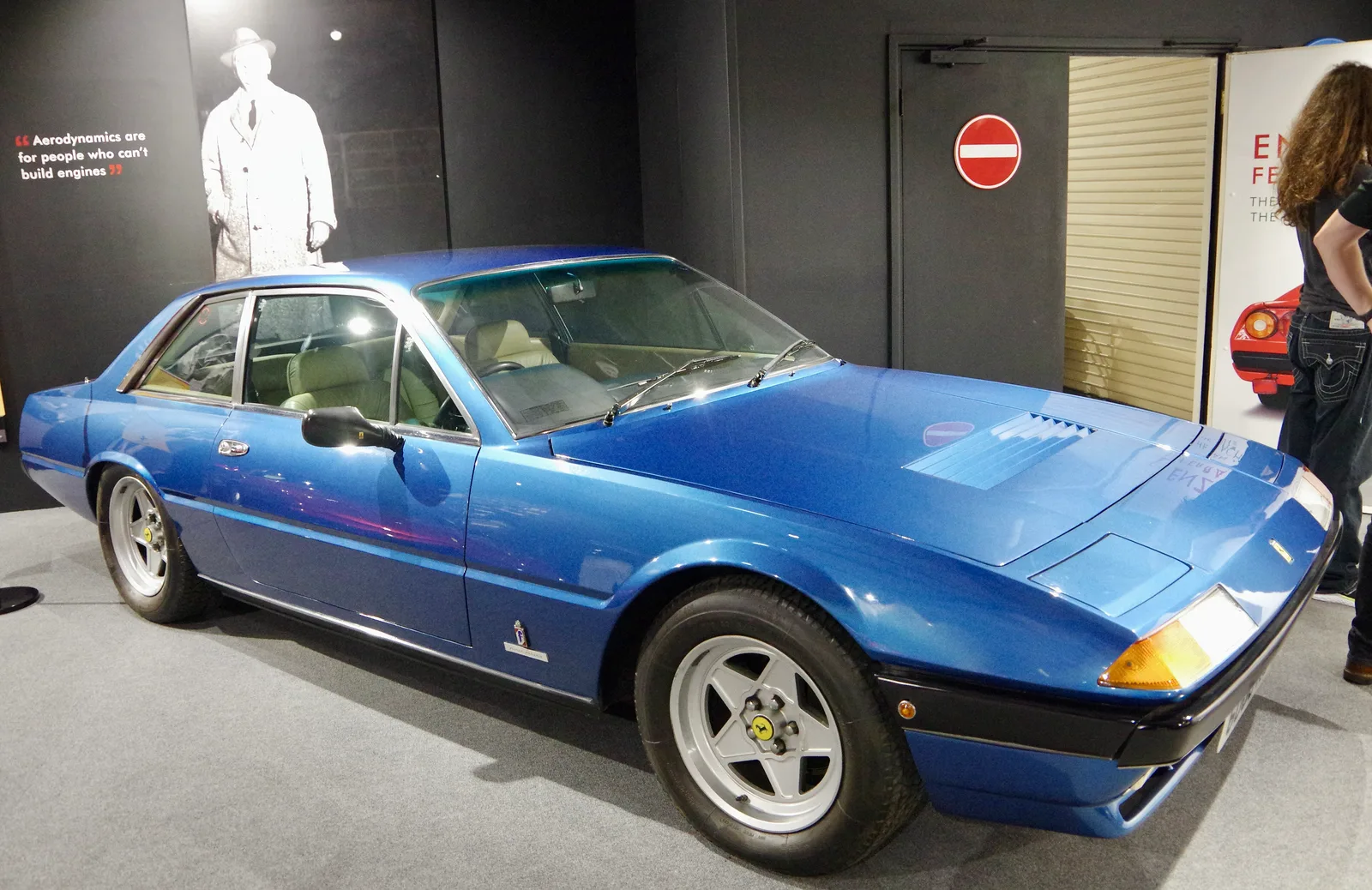
A 1982 400i in the Haynes Motor Museum. Not the car from the Bonhams sale, but the same type.
On the owners' forum FerrariChat, $25,000 to $30,000 was quoted years ago for rebuilding one of these V12s, and that is not today's price. Even that old figure sits around what the Bonhams car made. One repair costs about as much as the whole car.
Ground rent is a known bill: you know when and you know how much. A rebuild is a possible bill. Say the chance is one in four over the ten years you own the car, and the bill is €40,000. The expected cost is €10,000, but nobody pays the expected cost. An owner pays nothing or €40,000. A Mondial owner who stretches the belts swaps one kind of bill for the other: the regular cost falls and a chance of a new engine appears.
At these prices the owner of a 400i does have a way out. Faced with €40,000 to keep a €25,000 car running, they do not repair it. They sell it as a project, and the loss is capped at what they paid. That sum only works if the owner really does stop at that moment.
The Mondial 8 needs no way out, because there is no surprise. The belts come round every five years. €25,000 to the seller, €30,000 to the workshop. Would you still buy it with €55,000 on the windscreen?
Images: Ferrari Mondial 8 front left by Jalo (CC BY-SA 3.0); Ferrari F106B, Techno-Classica 2018, Essen (IMG 9160) by Matti Blume (CC BY-SA 4.0); Ferrari 328 GTB (5756232524) by nakhon100 (CC BY 2.0); 1982 Ferrari 400i by Dave Hamster (CC BY 2.0). Images resized.


