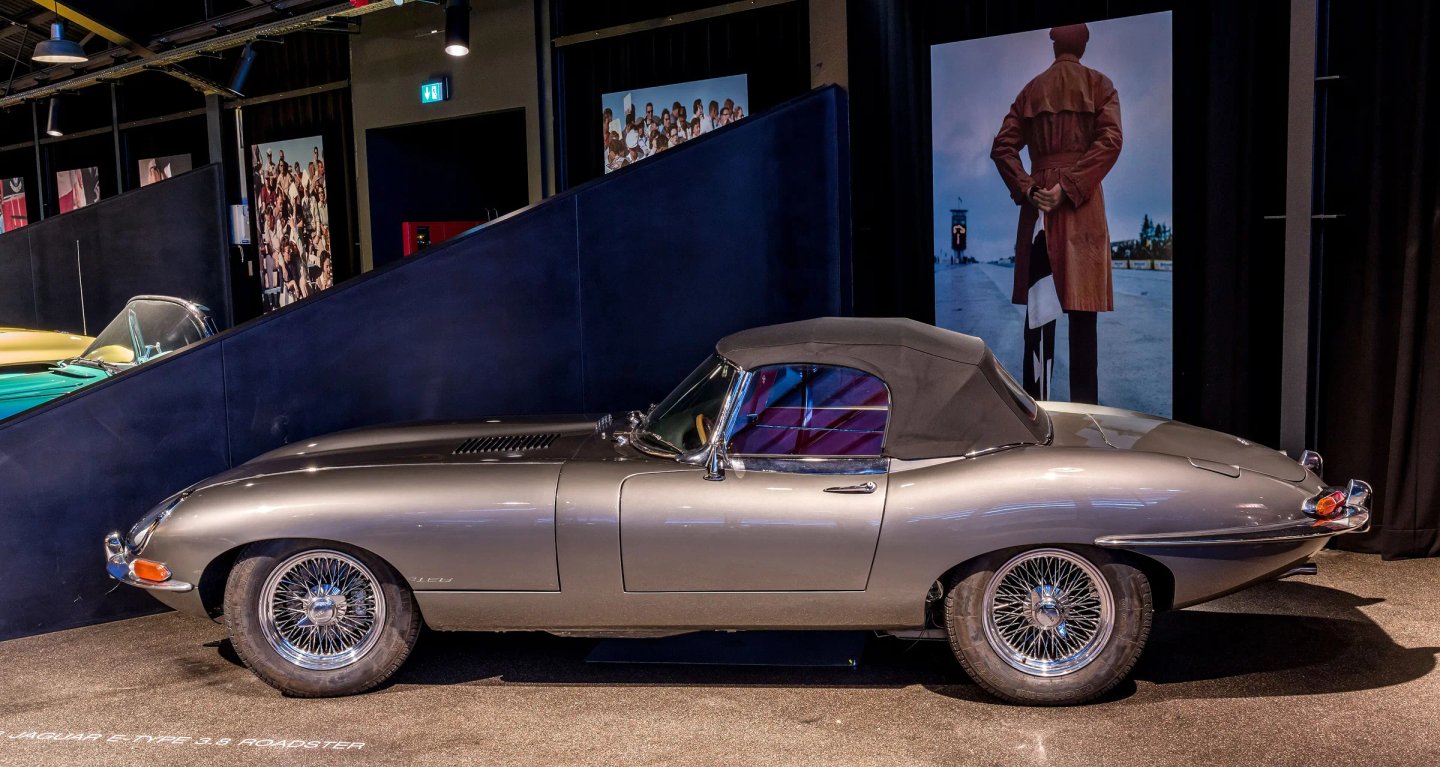
560 kilos of CO2. That is what a Jaguar E-Type 3.8 emits in a year of 1,500 kilometres. 1,000 kilos. That is the yearly share of building a new petrol Volvo XC40, before it has turned a wheel. Put the two side by side and you have a good story for the club evening. It is correct too. It just compares something nobody compares.
Where the numbers come from
The E-Type first. Motor magazine tested a 3.8 roadster in 1961 and recorded 21.3 miles per imperial gallon, or 13.3 litres per 100 km. A litre of petrol gives 2.82 kg of CO2 on the Dutch list of emission factors, extraction and refining included. That makes 375 g/km for a well-fettled test car. The 1,500 km is rounded: FIVA, the international umbrella body for old-car clubs, got 1,413 km a year from a survey of nearly 55,000 enthusiasts. That is a lobby asking its own members, so treat it as an order of magnitude.
Now the Volvo. These figures come from an interested party too, since Volvo sells the same car as an EV. By the company's life-cycle analysis a petrol XC40 costs 59 tonnes of CO2 equivalent over 200,000 km: 16 tonnes for production and 43 for use, which is 215 g/km. The electric XC40 comes to about 27 tonnes for production and 44 in total on the European grid mix, so 85 g/km. A Dutch car averages about 12,300 km a year on national statistics, which makes 200,000 km a little over sixteen years. That gives 1,000 kilos of production per year for the petrol car and nearly 1,700 for the electric one. The E-Type no longer has that line in its accounts. It was built in the 1960s and that is not going to happen twice.
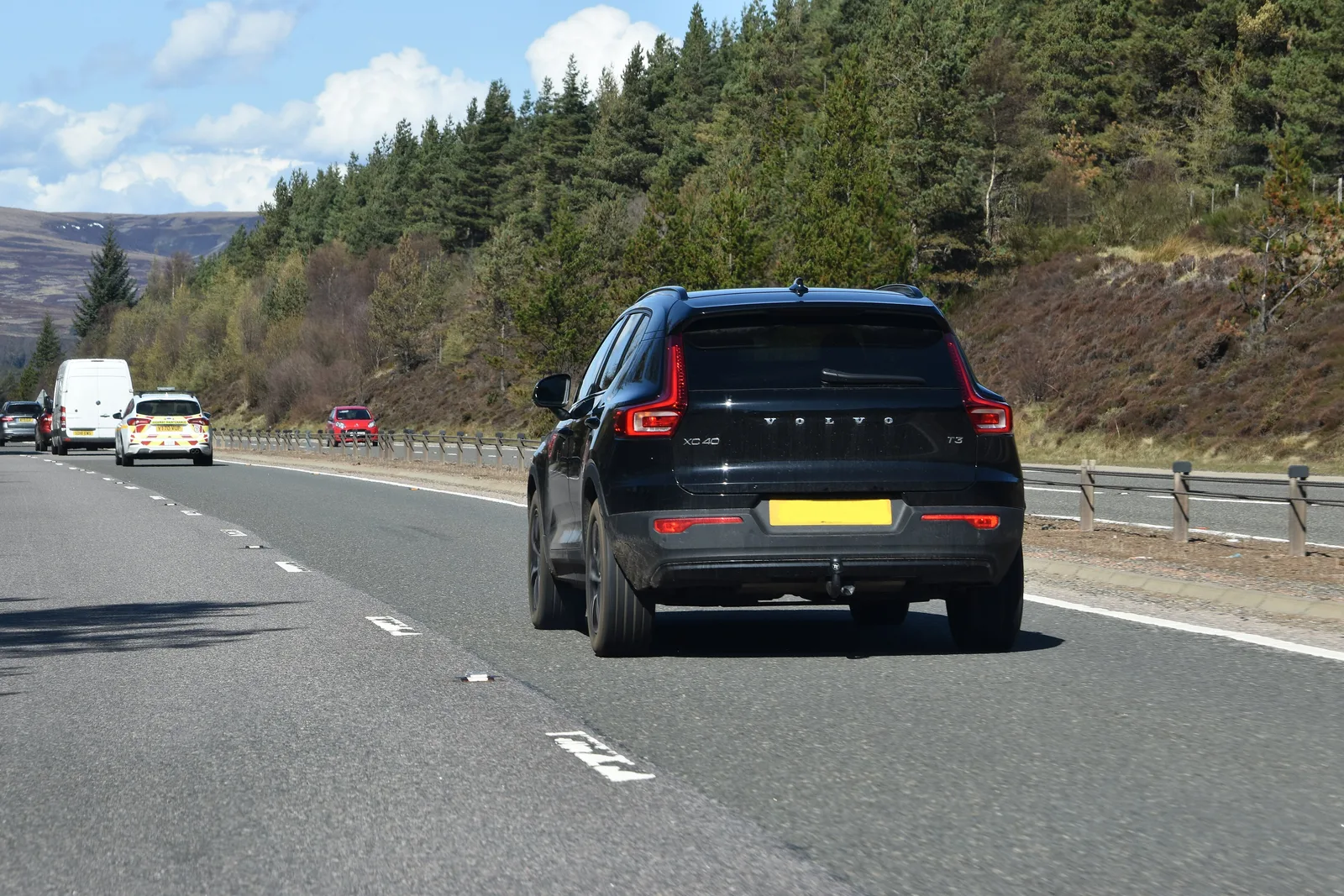
A petrol XC40 T3. Volvo published its sums for the petrol version of this model.
Two ways to depreciate
The 1,000 kilos is an accounting choice. A firm buying a machine can depreciate it on a straight line (the same amount each year) or by use (per item produced). The 1,000 kilos is straight line. Depreciate the Volvo's production by use and it becomes 80 g/km, for 295 g/km in all, against the E-Type's 375. Over 1,500 km a year that is 440 kilos against 560. The cars and the figures are the same, and still the result reverses.
Which method is right depends on what happens to the car. If the Volvo sits in a garage for sixteen years, covers 24,000 km and goes for scrap, straight line is fair. Such a car barely exists. Most new cars pass to another owner after a few years and use up their kilometres. A first owner who drove little has then used up little of the build.
Where the sum flips
Take the straight line anyway, the friendliest method for the classic. There is still a limit. The E-Type emits 160 g/km more than the Volvo in use, so its 1,000-kilo head start is gone at 6,250 km a year. Against the electric XC40 on European power the limit is about 5,800 km. Use the E-Type as a daily driver at the average 12,300 km and the score is 4.6 tonnes against 3.6 for the petrol Volvo and 2.7 for the electric one.
That is on the consumption of a new test car from 1961. Allow 16 litres for an old engine in daily traffic (an assumption of ours) and the limit drops to about 4,200 km. The average classic in the FIVA survey stays well below that. For someone who really uses their car, the limit is a live question.
Age does nothing in this sum. In 1959 Motor also tested a Mini, an Austin de luxe saloon: 6.49 litres per 100 km. That is 183 g/km, less than the 215 in Volvo's own figures. A car from 1959 emits less CO2 per kilometre than an SUV from 2021 because it is so much smaller. Mass and consumption decide it, and the year on the registration document does not.
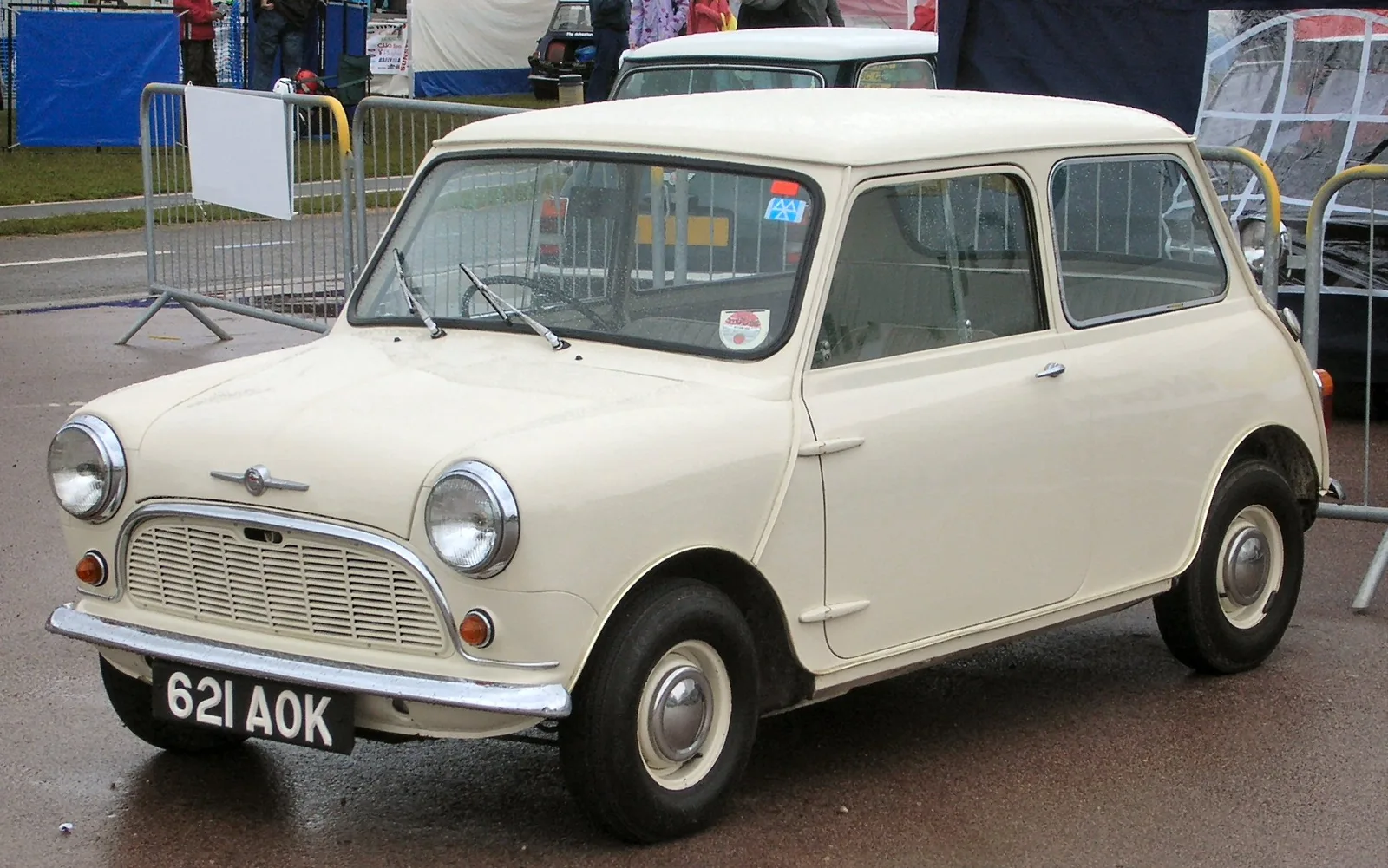
The first Mini badged as a Morris, from 1959. The Austin in the test was the same car with a different grille.
This sum covers CO2 only. An E-Type or a Mini of that period has no catalytic converter, and on carbon monoxide, nitrogen oxides and unburnt fuel any comparison with a modern car goes badly. Restoration is missing too. Panels, paint and parts get made somewhere as well. We have no reliable figure for them.
What actually changes
The trouble with the comparison at the top is that nobody makes that choice. Hardly anyone sells an E-Type to do 1,500 km a year in a new Volvo instead. The owner already has an ordinary car. The question is what those 1,500 km add. Had they been driven in a petrol car anyway, it is 160 g/km: 240 kilos a year. Against an electric car it is 435 kilos. And if those trips would not have happened without the E-Type, which is plausible on a Sunday, the whole 560. So the hobby costs somewhere between 240 and 560 kilos a year. Anyone may have a view on that, but it is the number that belongs to the decision.
The 1,000 kilos does exist somewhere. It applies to a car really used that way: bought new, for Sundays, with few kilometres, staying long in the same hands. That hardly describes a Volvo XC40. It does describe the new sports car on delivery miles in a heated garage. It was built specially, and its production will never be spread over 200,000 km. So the club-evening number holds, only it is not about the classic against the ordinary car. It is about the old hobby car against the new one.
Images: Jaguar E-Type 3.8 Roadster (Volante) jm21175 by © Jörgens.mi (CC BY-SA 3.0); Volvo XC40 T3 (2021) (52097236744) by Charles from Port Chester, New York (CC BY 2.0); Morris Mini-Minor 1959 (621 AOK) by DeFacto (CC BY-SA 2.5). Images resized.


