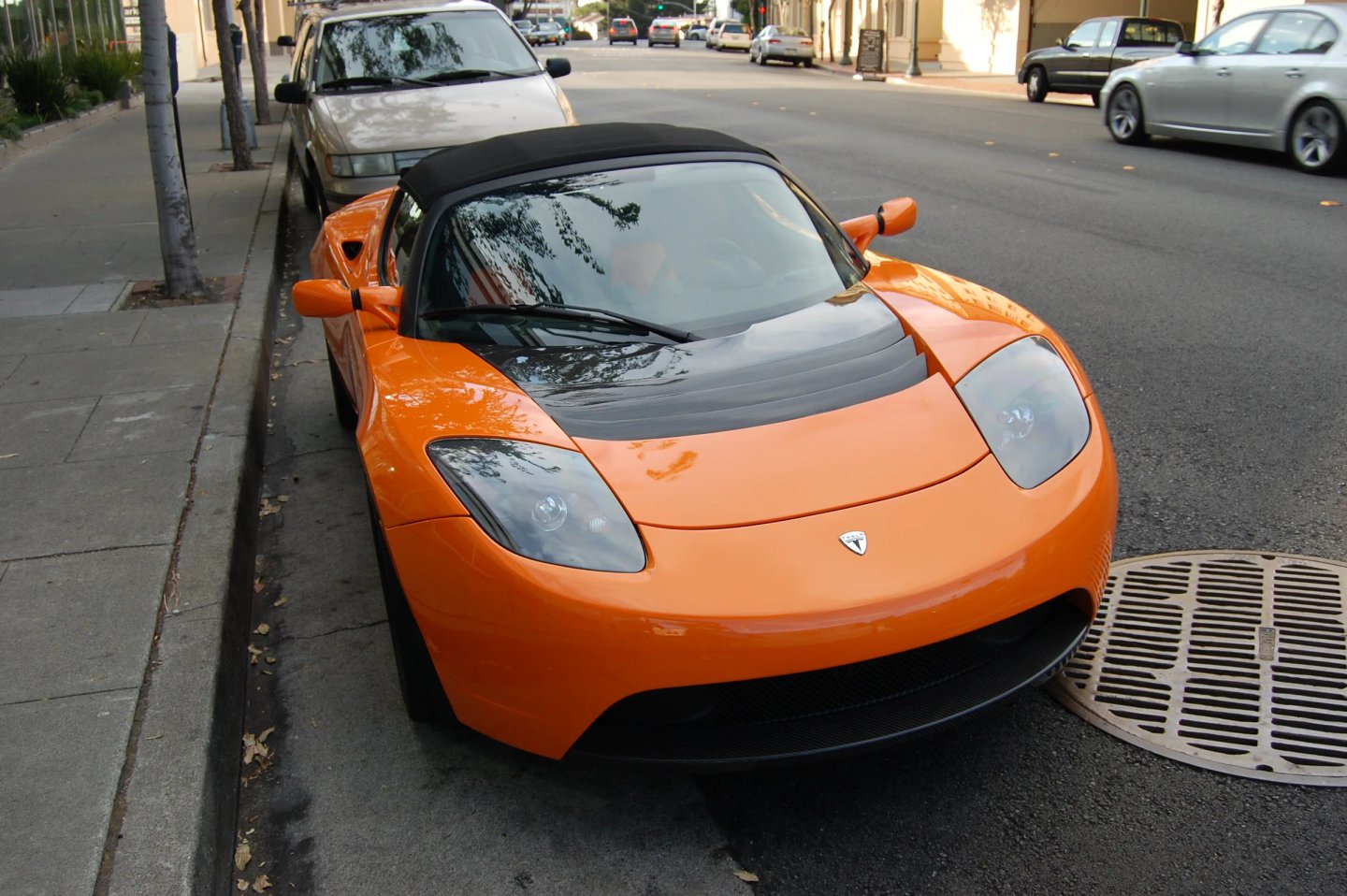
What is a Tesla Roadster's battery worth? On Bring a Trailer in August 2026, a 2008 Roadster with 46,000 miles sold for $43,000. Three weeks later another 2008 Roadster made $77,000, with 16,000 miles and the later R80 3.0 pack, an upgrade Tesla charged $29,000 for at the time. The gap is $34,000. Two sales prove little: the mileages differ and we do not know the condition of either car. Even so, those buyers seem to have done the sum this way: the car, and on top of that the battery.
Nobody looks at the engine of an old Porsche like that. It goes to the question of whether an electric car can become a classic at all, and the answer depends on what makes a classic possible.
What makes a classic possible
A classic is a car that keeps going without its maker. Porsche Classic and Ferrari Classiche help, but a forty-year-old car does not depend on them. There are specialists and clubs, and small firms making parts again. That works because most parts can be made in small numbers. A lathe can make one piston. A small firm can press fifty rubber seals and take a year to sell them.
The economic term is minimum efficient scale: how many you must make before the cost per unit becomes reasonable. For a piston it is a small number. For a lithium cell it is a whole factory, and that factory runs for whoever buys millions. Nobody makes 7,000 cells for an enthusiast.
Being electric is not the problem in itself, then. Detroit Electric built about 13,000 cars between 1907 and 1939, on lead-acid batteries. Some still run, and in 2009 the battery maker GS Yuasa returned one to running order in Japan. Lead-acid batteries are still made everywhere, because every petrol car has one.
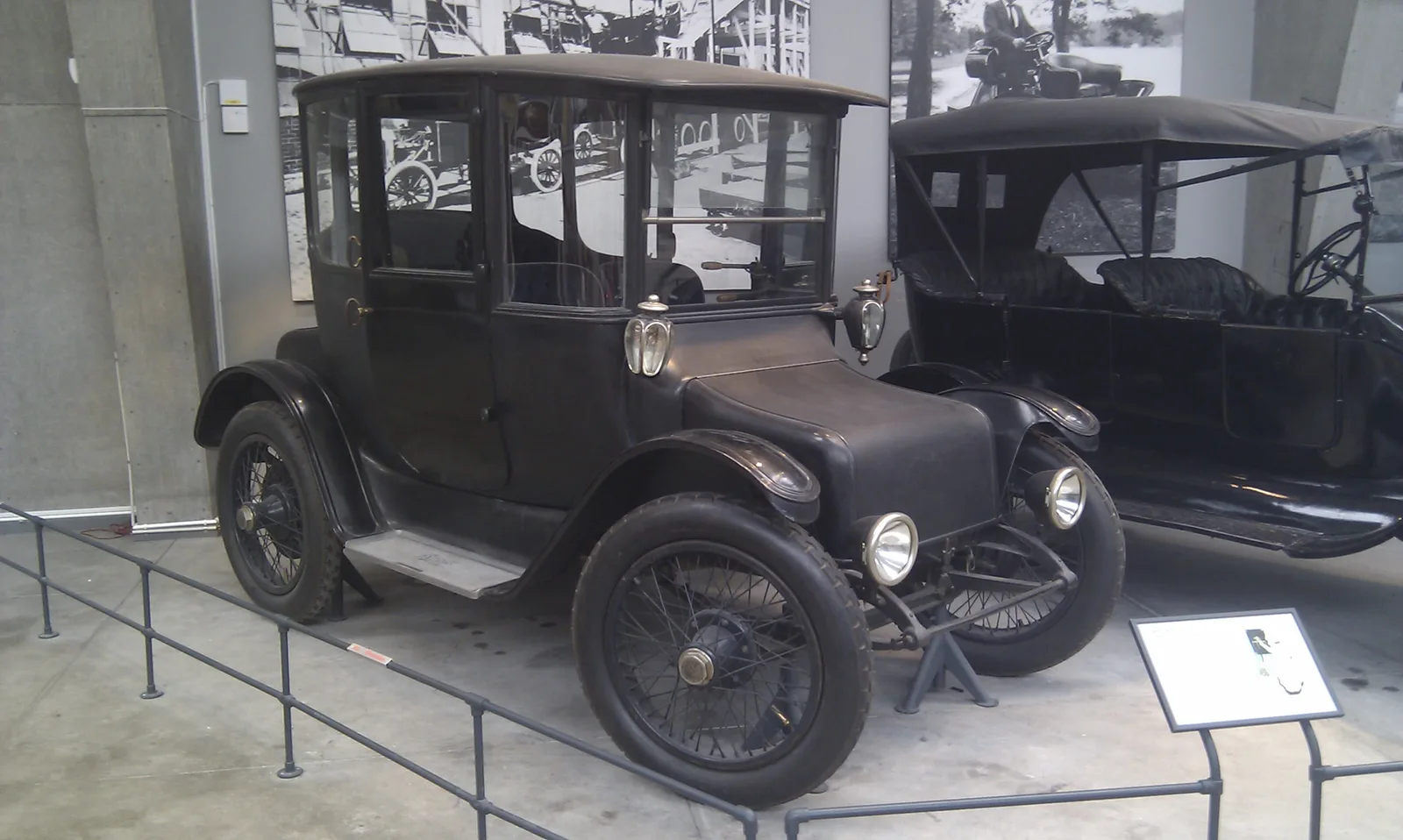
A 1915 Detroit Electric, in the technical museum in Stockholm.
Why the Roadster is better off than it looks
On paper, the Tesla Roadster holds the worst cards. About 2,450 were delivered, between 2008 and 2012. The pack holds 6,831 cells of a type long since overtaken. Tesla's service centres do not repair it, and a new pack cost up to $30,000 according to Pete Gruber in 2021, and over $40,000 according to InsideEVs in 2024. Since the R80, Tesla has done little with the car, apart from releasing design documents and diagnostic software in November 2023.
We started this piece expecting the cells to finish off the Roadster. That is not how it has gone, because of a choice Tesla made in 2008. The Roadster runs on 18650 cells, the format from laptop batteries. The original cell is obsolete, but the format is still made in large numbers for other uses. Since 2024 the Texas firm Re/Cell has built a new pack with it: 3,069 or 3,861 cells of 3,500 mAh, giving 38 or 47 kWh against the original 53. The company says that saves up to 180 kg. The price is $24,895 or $27,895, and that is after an $11,500 credit for a defect-free original pack. Owners whose pack has died, and who therefore have the most reason to replace it, reach $36,395 or $39,395 if that credit falls away.
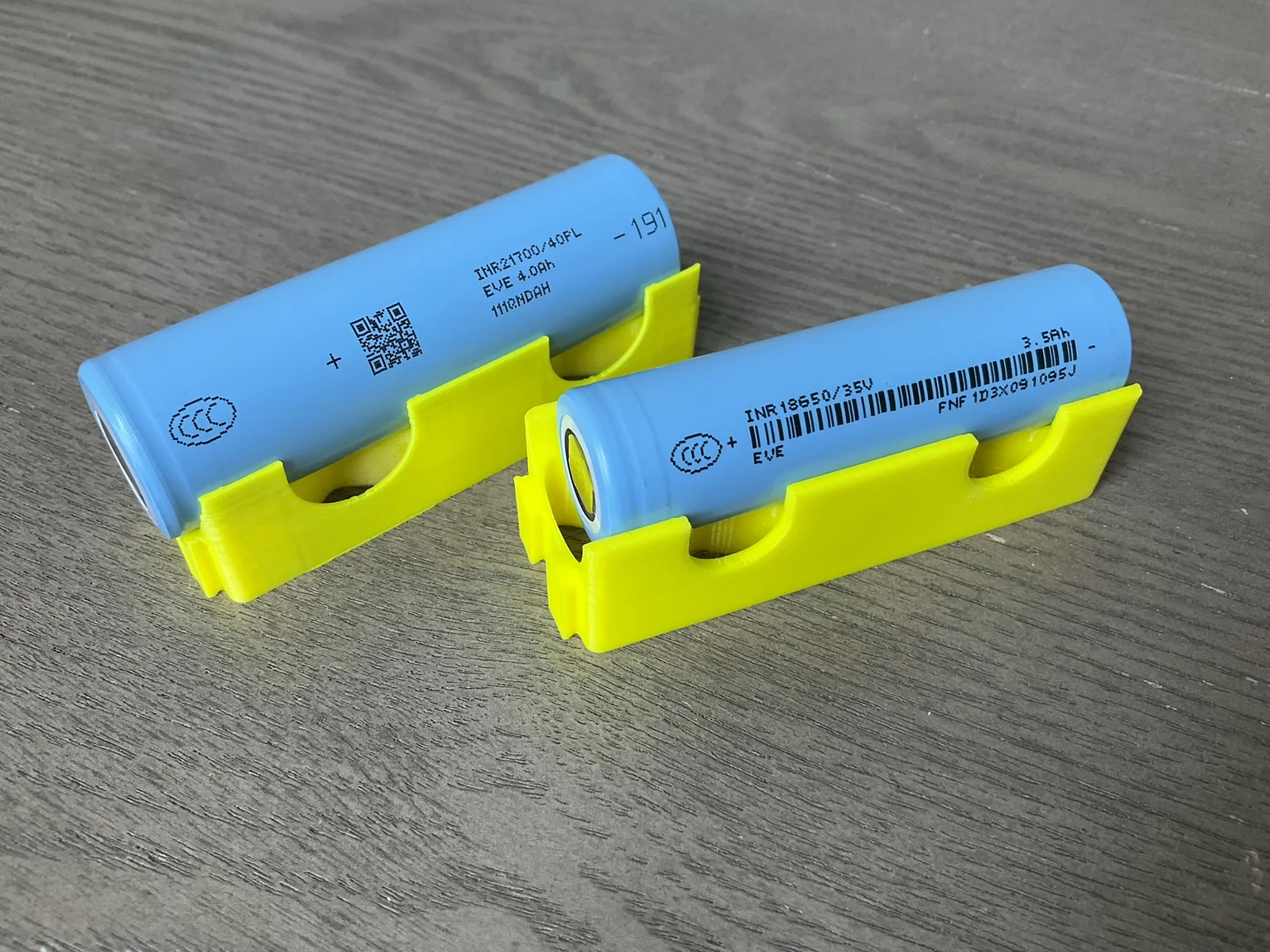
A 3.5 Ah 18650 cell (right) next to a larger 21700.
In that run of auctions, the dearest 2008 had the non-original pack. On a classic, a replaced major component usually costs money. Here the buyer pays for it. An early chassis number can still bring a lot: in February 2022, number 13, with 840 miles, sold through Gruber Motors for well over $250,000. But most Roadsters on Bring a Trailer in 2026 fell between about $43,000 and $77,000, and within that range the pack seems to weigh heavily.
You cannot keep a cell on the shelf
The difference from an old engine lies in what can sit on a shelf. A gearbox from 1965 in a dry barn is still a gearbox in 2026. A lithium cell ages even when nobody uses it: its capacity falls for good, faster in heat and at a high state of charge. New old stock does not exist. An owner cannot buy a pack today for 2050. Roadsters left unplugged for long periods have sometimes run so flat that the pack would no longer charge. A barn find emerges after forty years with flat tyres and hardened rubber, but a battery pack after forty years is probably waste.
The BMW i3 is the opposite case. About 250,000 were built, from 2013 to 2022, so there are plenty of donors and workshops. The pack has eight modules, which cost $1,700 to $1,800 each in 2023 according to Recurrent, and a bad module can be replaced on its own. But these are large cells of 60 to 120 Ah, tuned by BMW with Samsung SDI. They are not also sitting in a laptop. And every donor is as old as the car it is meant to save. Numbers help less here than with a petrol engine, because they all age at once.
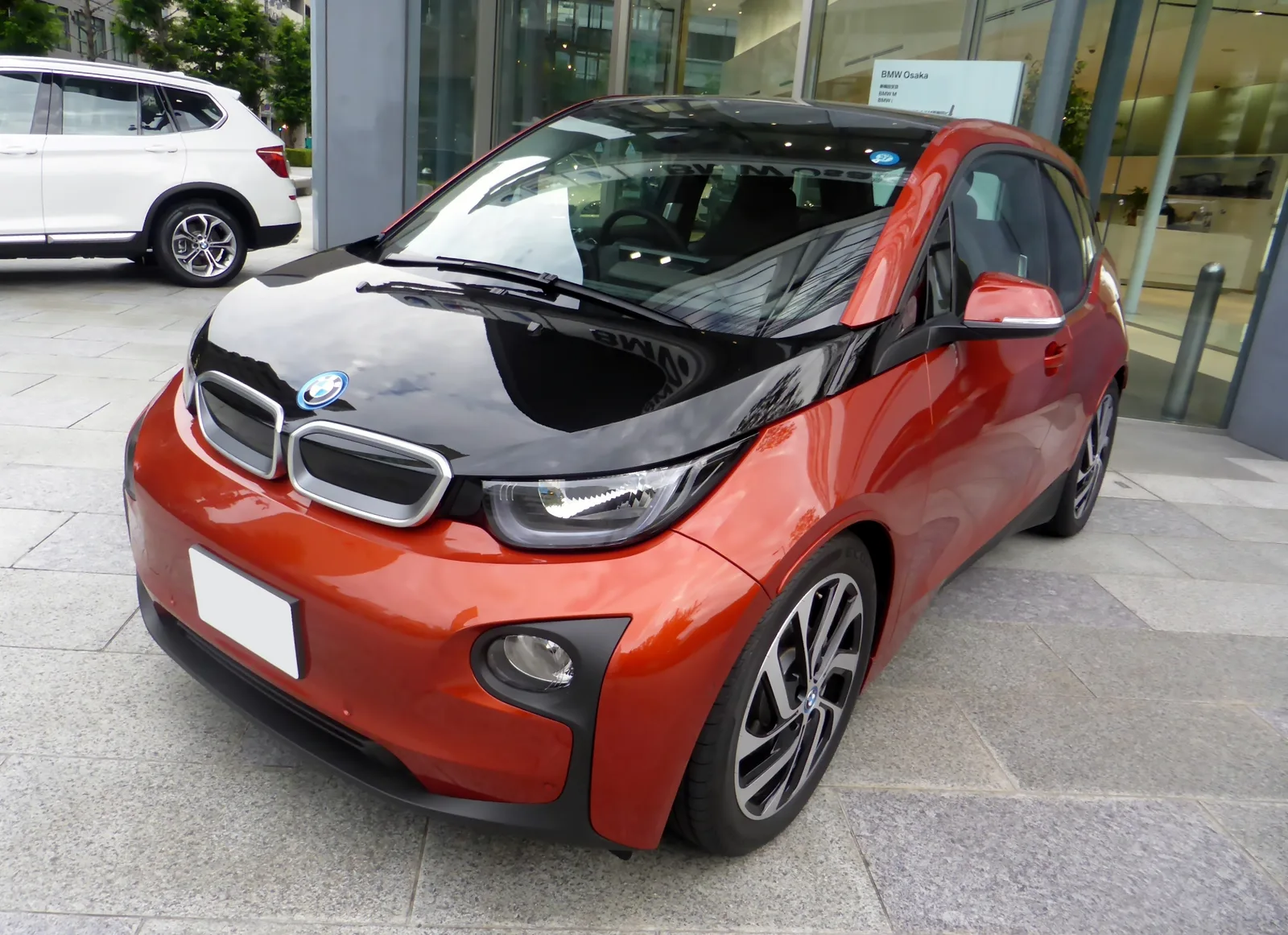
A BMW i3 with range extender. About 250,000 of this generation were built.
What the Roadster hangs on now
So the dependence has moved: from Tesla to one firm in Texas, and to a cell format made for other people. That is better than the position we started from, but it is not a safe one. Nobody knows whether manufacturers will still make 18650 cells fit for a car in twenty years. Nobody knows whether Re/Cell will still exist. The released documents would help a successor, but one would have to appear, for a few thousand cars. Its sums will depend on what the car is worth by then. At $43,000, a $27,895 pack is already 65% of the car.
Whether a Roadster is a classic in thirty years is not for collectors alone to decide. It depends on someone willing to build a third or fourth generation of pack by then, and on whether they can still buy cells to do it.
Images: Tesla Roadster Sport-2 by Eugene Zelenko (CC BY-SA 4.0); Detroit Electric 1915 by Kopo25 (public domain); 18650 and 21700 lithium ion battery cell by Sevenethics (CC0); BMW i3 Range Extender (1Z06) front by Tokumeigakarinoaoshima (CC0). Images resized.


