"Buy the best that your budget allows." That was the British magazine Practical Classics on 16 February 2021, in an article written, of all things, for people looking for their first project. Buy the best you can afford: nearly every buying guide says it and hardly anyone checks it. It can be checked, because it is a claim about prices.
The claim is that a car in good condition costs less than a bad car plus the work of making it good. Testing that takes four prices and a few invoices.
Buying or making again
Around 1970 the economist James Tobin popularised a ratio known as q: the market value of an asset divided by what it would cost to replace it. If q is below 1, buying is cheaper than building. Nobody puts up a new factory while an existing one is for sale. The buying guides are saying the same thing about classics.
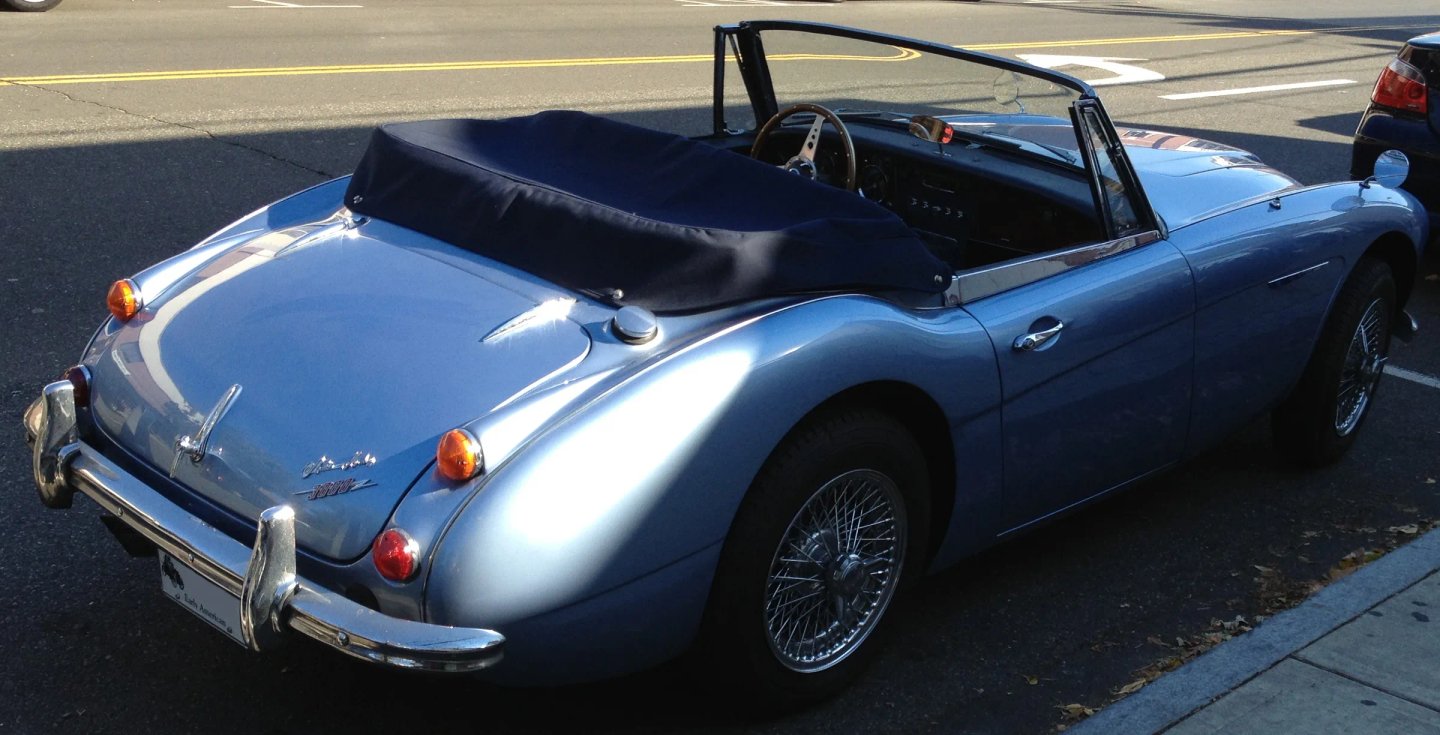
Take the Austin-Healey 3000 MkIII, the BJ8. In April 2022 the magazine Classic Cars, using Russ Smith's market analysis, gave four prices that rise with the condition of the car. For the 100/6 in the same list those steps are called project, usable, mint and concours.
- Project: £20,000
- Usable: £30,000
- Mint: £48,500
- Concours: £69,500
These are 2022 prices in sterling. What matters here is the distance between the steps.
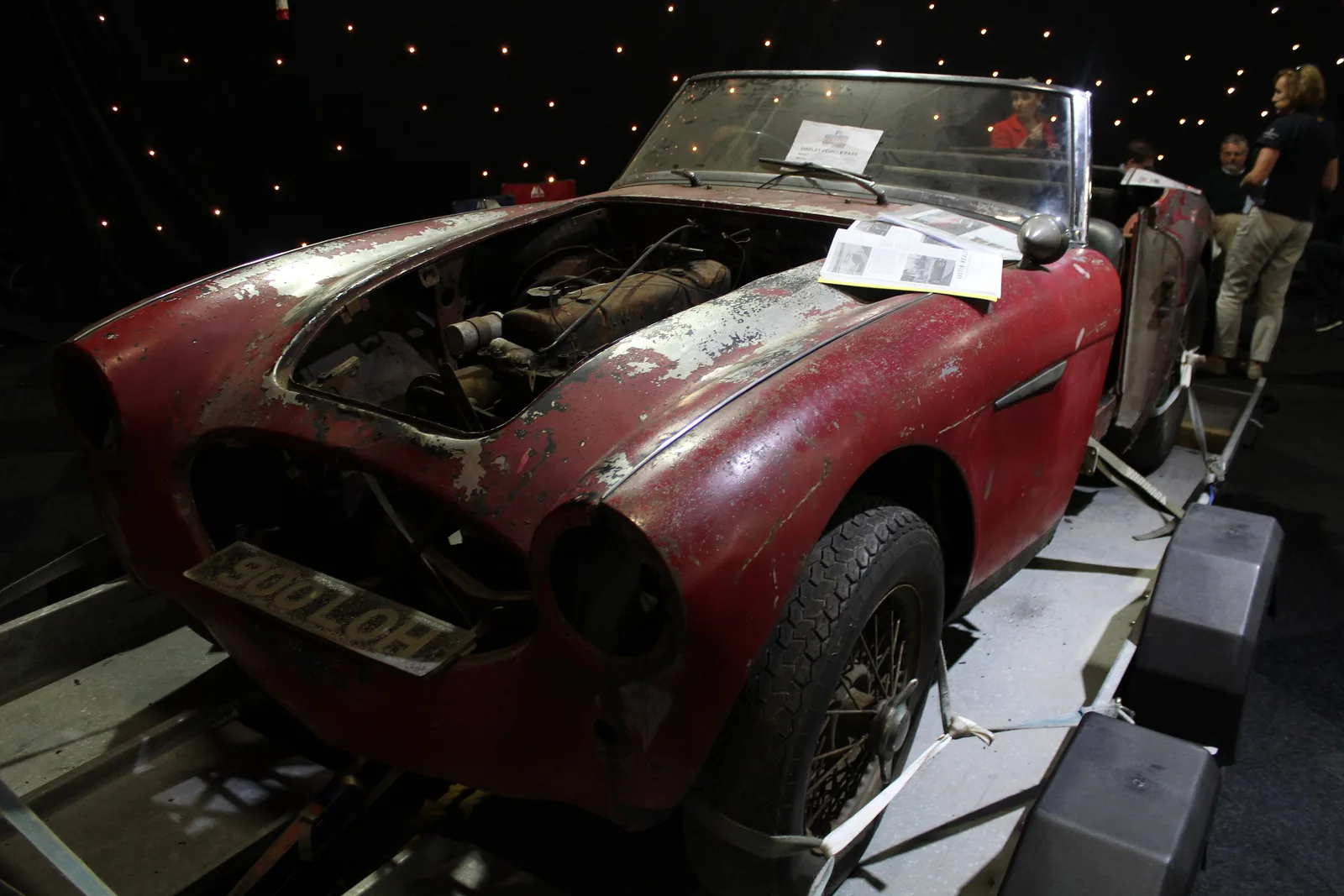
An Austin-Healey 3000 as a restoration project, on a trailer at an event.
Against those prices stand the invoices. On 29 June 2026 Osenat in Fontainebleau sold a 1964 BJ8 that had been restored in 2019 for more than €100,000. It made about €62,000. That car had also been modified, with triple Webers, power steering and a side exhaust among other things, so not all of the gap is lost restoration money. A cleaner case is a 1967 BJ8 at RM Sotheby's. Fourintune, a Healey specialist, restored it in the late 2000s for about $90,000 in its original colour. It sold for $92,000. The buyer paid for the restoration and got the car for another $2,000.
Now run the sum for a project. Assume a restoration like the 2019 one costs about £85,000, which is our conversion of that €100,000. Project plus restoration then comes to £105,000, for a car the list puts at £48,500. That is a q of 0.46.
The second step is just as clear. Hagerty wrote in April 2022 that workshops average more than $70 an hour and that a restoration often takes hundreds of hours. Three hundred hours is $21,000 without a single part. In the same month, the step from usable to mint cost £18,500 with the work already done.
At the bottom of the ladder, the advice holds easily.
It does not hold for every car. An hour of panel work costs about the same on an expensive car as on a cheap one, but the gaps between the steps grow with the price. Hagerty UK ran these numbers in 2020 from its own price guide. A Porsche 356 pre-A cabriolet had £391,000 between fair and concours, and there a project can pay. The whole Healey ladder is £49,500 tall. The advice mainly applies to cars whose ladder is shorter than one restoration.
What the top step buys
By the same sum, the last step is a bargain too. £21,000 from mint to concours is probably less than a workshop would charge to take a good car that far. This is where the sum runs out, because q only asks for the cheapest route to a given condition. Whether you want that condition is a different question.
The lower steps buy things a driver uses. A floor without holes. An engine that holds its oil pressure. Doors that shut without a shove, an overdrive that engages. Hagerty describes its second class as a car that could win a local or regional show, which is already far more than a driver needs. Its first class is the best in the world, cars you effectively only see at concours events.
That last £21,000 pays for the right hose clips, the right bolt heads and paint without a single stone chip. Driving takes those away. One summer on the road and you own a mint car at the concours price.
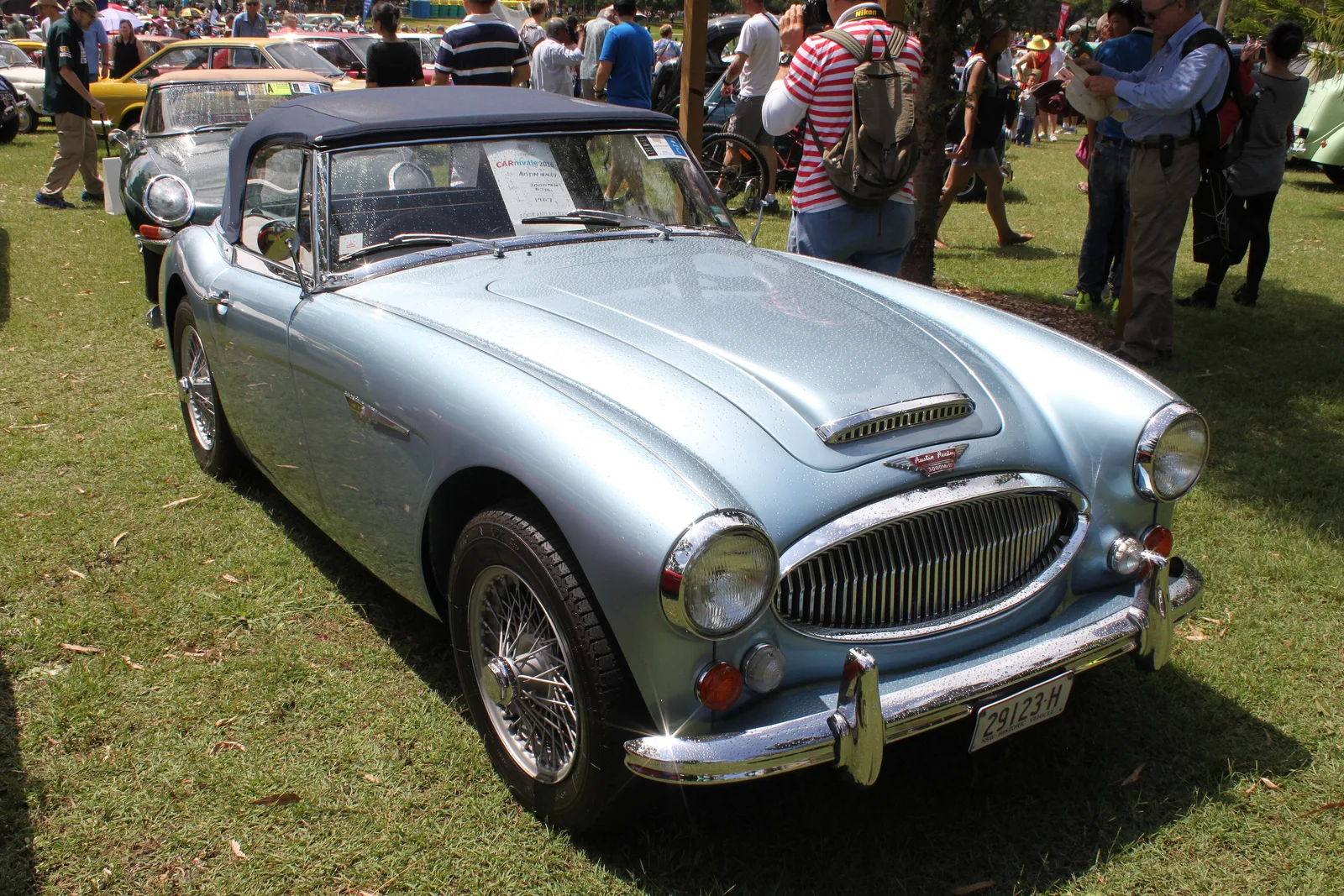
A 1967 Austin-Healey 3000 MkIII at a car show in Parramatta, Australia.
An owner who does not drive and holds the car as an asset can find that last step rational: at resale, the car raises the fewest questions. That makes it an investment idea, with the risks that come with one. Taste can move and the market can fall. The grade does not come back once something goes wrong.
Who pays for the discount
There is one more question under all of this. Why is a finished BJ8 for sale below the cost of its restoration at all? With factories, that does not last. If a factory is worth less than it costs to build, everyone stops building, supply falls and the price rises until q is back near 1. With classics, q stays below 1.
The reason is that some of the builders are not looking for a return. Someone who spends years on a Healey, or pays a specialist to, does not always count it as an investment. Hagerty says so in its own restoration advice: you probably will not get it back, so do it for the enjoyment. Then the owner sells, or the heirs do. The next owner gets the hours for nothing.
The advice only works as long as enough people ignore it. If everyone buys the best they can afford, nobody starts a project. Then no more BJ8s come to market below the cost of their restoration. Whoever buys the best today is buying the loss of someone who did it differently.
Images: Austin Healey 3000 Mk III Rear by V-Hantarex (CC BY 4.0); Austin Healey 3000 restoration project (15335119352) (2) by Thomas's Pics (CC BY 2.0); 1967 Austin Healey 3000 MkIII BJ8 (25075159980) by Jeremy from Sydney, Australia (CC BY 2.0). Images resized.


