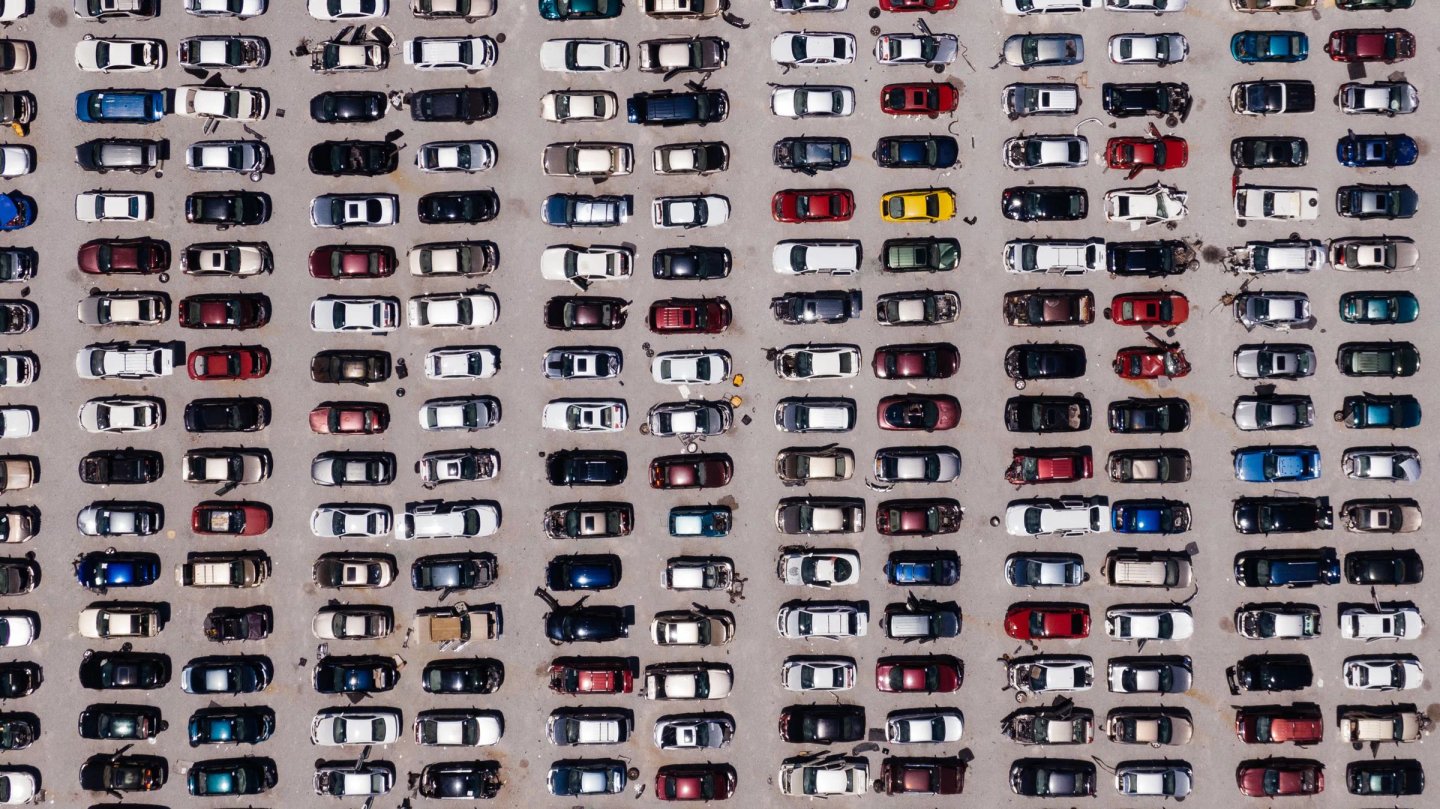
The seller who leaves the rust out of the listing thinks this protects the bid. More likely it keeps away the buyers who would value the car most. Steven Tadelis and Florian Zettelmeyer tested this in 2008 on 8,096 cars. The study appeared in the American Economic Review in 2015. The figures below come from the working version of April 2010, still marked as preliminary. The conclusion is the same in both.
The trial ran for 19 weeks at an American wholesale auction whose key market was Texas. Only dealers buy there. Up to twelve lanes of cars sell at the same time, each car in about 45 seconds. Inspectors checked every car in the trial and gave it a grade from 1 (rough) to 5 (clean), a list of damage and an estimated repair cost, $1,348 on average. If the chassis number ended in an even digit, the report went online. If it ended in an odd digit, it stayed in the drawer. That left the report as the only difference between the groups.
Theory had a clear expectation. In 1982 Paul Milgrom and Robert Weber showed that more information raises the average revenue of an auction, a result known as the linkage principle. With a fixed set of bidders, though, a second prediction comes with it: good news pushes the price up and bad news pushes it down. Every seller who ever left out a photo of a sill is reasoning the same way.
What happened
In the last nine weeks of the trial, a car without a published report brought in $3,262 on average and a car with one $3,888. That is per car offered, with unsold cars counted as zero. The gap is $626, or 19%. After adjusting for the week and the grade among other things, $439 remains. That result is less certain.
Split by grade and measured against the national auction price for the same type, it looks like this. Grade 1 gained 17.7%, grade 5 gained 65% and grade 3 gained 8%, which cannot be told apart from zero statistically. The worst cars, the group theory said should fall, did better than the middle.

Rust and flaking paint on the front of an old car.
This is not a higher price, tempting as it is to write it that way. Revenue rose mainly because more cars sold: the chance of a sale went from 39.2% to 45.5%. The price per car sold barely moved, from $8,446 to $8,705, and that gap is not significant. The authors point to reserves. Sellers had set them without knowing a report would appear. If they were on the high side, more bidders would first mean the reserve being met.
Who turns up to bid
The theory's expectation rests on an assumption: the same bidders, with more information. Here that did not hold, because dealers differ. The authors take one dealer in a wealthy area and one in a poor area. The first sells clean cars to customers who notice every scratch. The second sells rough cars to customers who need a car and can be less fussy. Both value a clean car above a rough one, but the second will pay more for the rough one than the first. A Mercedes dealer will not put an old Corolla on the lot, Zettelmeyer added. A Toyota dealer will.
Without a report they do not know which lane to stand at. Run it through, with made-up amounts and the structure from the paper. Two dealers will go to $4,000 for a rough car, and two others to $2,500. In an ascending auction the bidding stops about where the second-keenest bidder drops out. If the first two both stand at this car, it makes $4,000. If only one of them does, it makes $2,500. If everyone turns up by guesswork, with two cars and four dealers, the chance of that first outcome is one in four.
The report sends the other two away, and to the seller that feels like losing buyers. But they were never going to win this car. All they contributed was a low second bid. Their departure costs nothing, and the two who remain bid against each other.
That also explains the middle. Both kinds of dealer think much the same about a grade 3 car, so it makes little difference who is standing there. A report mainly helps cars that are clearly something. The car that gains least is the one nobody can place: tidy for its age.
What the trial does not say about an enthusiast car
These were dealers, in 2008, with cars that made $8,600 on average. A private buyer of an enthusiast car looks for longer and has no customers to think of. Even so, we think the mechanism is stronger there. One buyer wants a concours car and another wants one for the track. A third owns a welder. Say a sill has a repair quote of €3,000. Someone who welds might spend €800 on materials and a few weekends. That person can outbid everyone, but only if they know the sill is the issue.
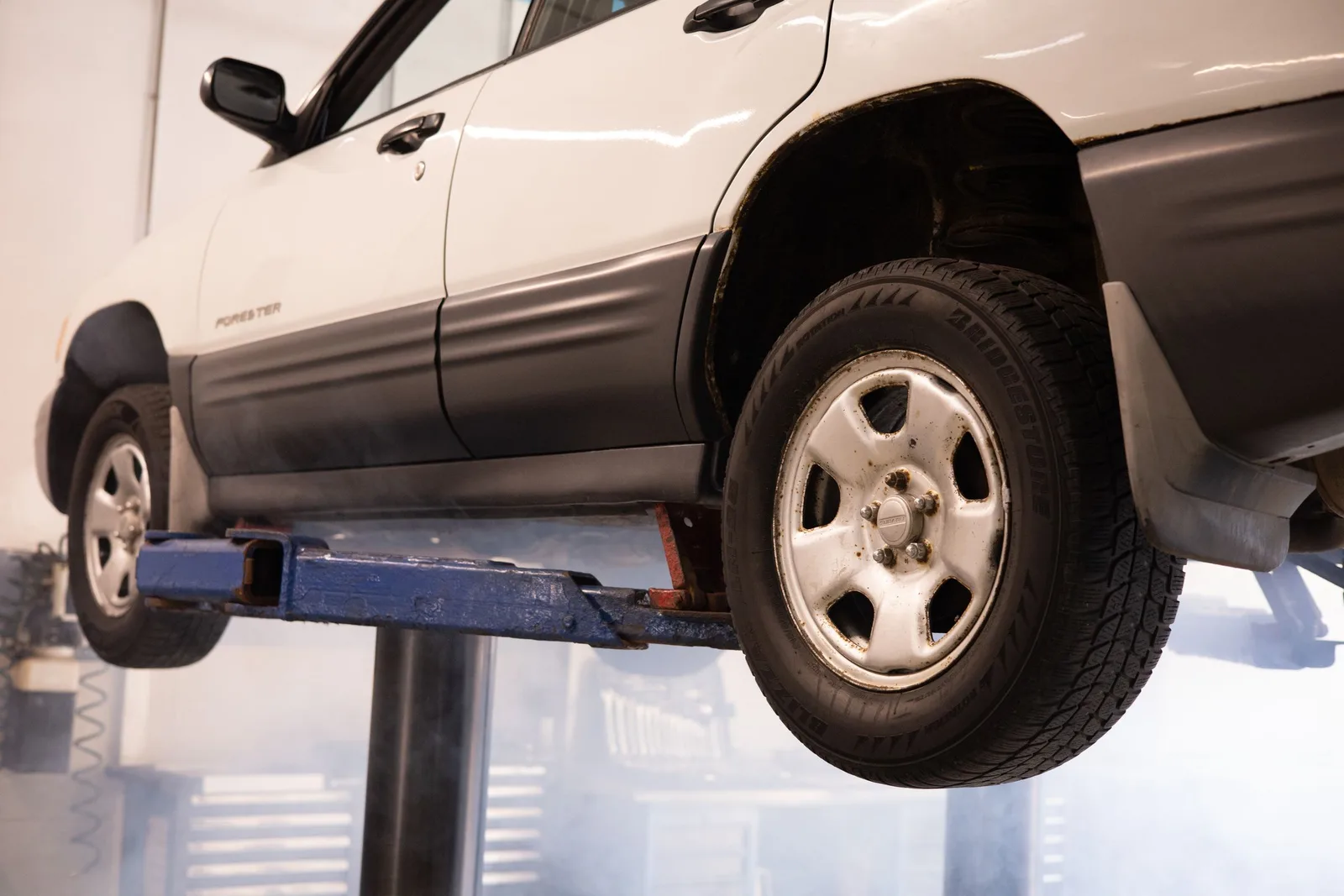
A car on a lift. In the trial the report came from an inspector and not from the seller.
The trial leaves two things in place. The report came from an independent inspector, with a grade and a sum of money. "Some signs of use" from the seller is something else, and buyers hear it that way. And a bad car stays worth less than a good one. The report only brings it to the bidders who value it most.
For ten weeks nothing happened
Those 19 weeks fall into two parts. In the first ten the reports were online too, and the gap was $13: $3,690 with a report and $3,677 without. The researchers suspected that dealers did not know the reports existed, since they were rare for cars from other dealers. From week 31 they e-mailed every buyer once a week. Only then did the effect appear, in a worsening market, with Lehman Brothers collapsing in week 38.
Sellers read a trial like this as a case for honesty. The first ten weeks say something else. Everything was properly published then and it achieved nothing, because a report only works if the buyer sees it before deciding whether to come. A fault shown in photo 64 or mentioned in paragraph nine has been disclosed, and it has the effect of the reports from week 21. Anyone who takes this seriously puts the rust in the first line of the listing and in the photo straight after the main shot. That feels like the worst possible place.
Images: Photo by Kelly on Pexels; Photo by Magda Ehlers on Pexels; Photo by Artem Podrez on Pexels. Images resized.