In 1990 IBM launched a cheaper version of its laser printer that ran 50% slower. PC Magazine found it was the same printer, with extra chips added to slow it down. So IBM spent money to make a worse product it could sell for less. The economists Raymond Deneckere and Preston McAfee gave this a name in 1996: damaged goods. A firm that deliberately harms its own product can sell one machine to two kinds of customer, each at what they will pay.
In August 2023 Porsche did the reverse. The 911 S/T uses the 525 PS 4.0-litre from the GT3 RS. Where the RS has a PDK it has a manual gearbox, and it has no rear-axle steering and no DRS. In Germany it cost €292,187. The GT3 RS stood in the same configurator at €248,157. Porsche took technology out and asked €44,030 more.
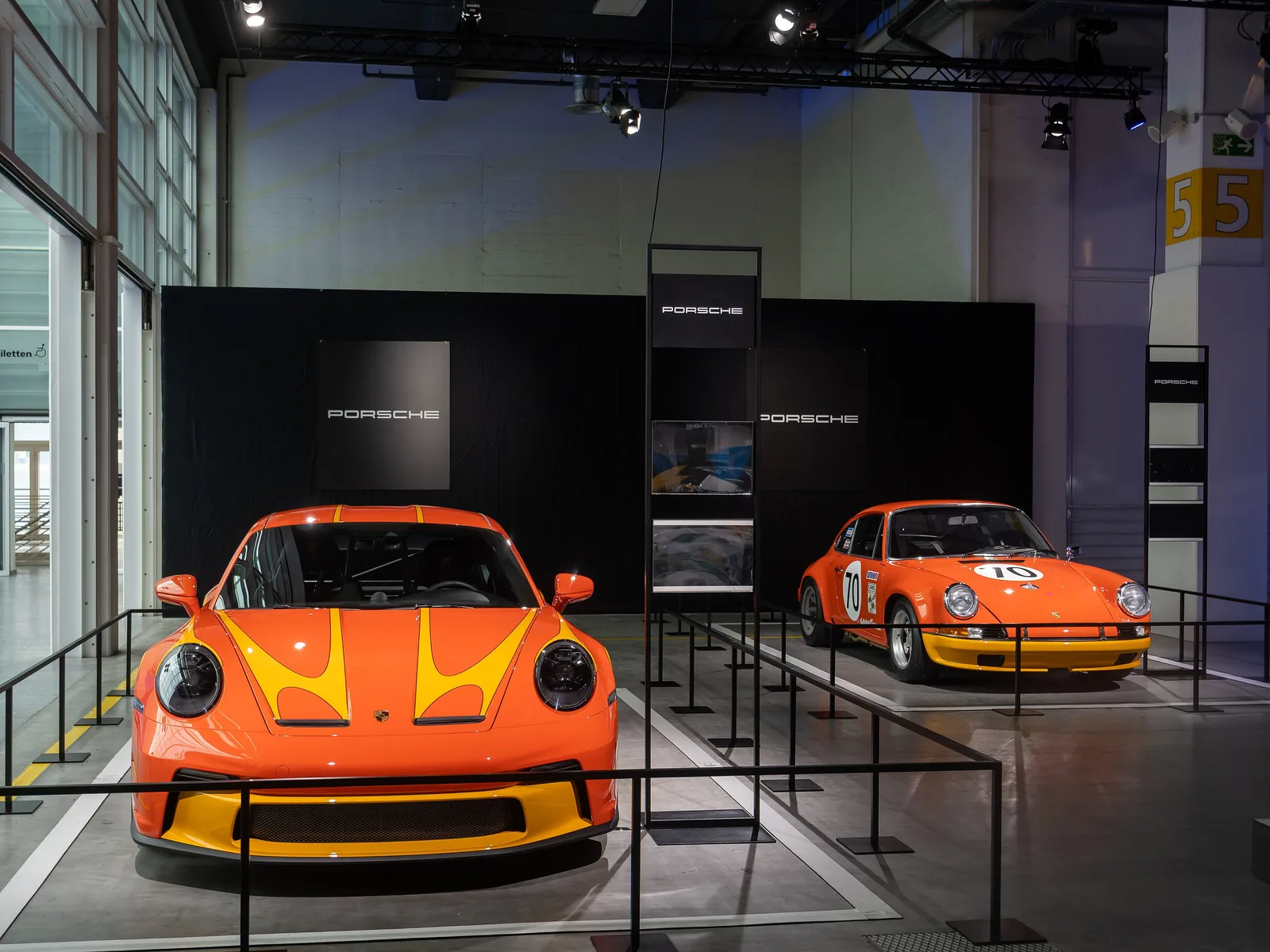
A type 992.1 911 S/T beside an original-type 911 ST at Auto Zürich 2025.
That sum is not entirely fair. The S/T is no stripped-out RS. Doors, roof, bonnet and front wings are carbon fibre, the wheels are magnesium and ceramic brakes are standard. A light clutch and single-mass flywheel take 10.5 kg out of the rotating mass. At 1,380 kg it weighs nearly 40 kg less than a manual GT3 Touring. There are 1,963 of them, for sixty years of the 911. So part of that €44,030 goes on parts and part on the production number. Porsche does not say how the rest divides.
Why does damaged goods run backwards here? IBM's customers bought a printer to print pages, and a slower printer does less of what it is for. An S/T buyer is not buying a lap time, since Porsche developed the car for public roads. The buyer is buying the work itself: the clutch, the gearchange, steering without help from the rear wheels. For this customer the work is the product, and removing something that does the work makes the car better in their eyes. There is nothing odd about that. Porsche's press kit calls it purist, and the rest of the car world calls it analogue. The only question is what else gets sold under that word.
Three things called analogue
Analogue can mean three things. The mechanism: nothing electronic sits between the driver and what the car does. The controls: dials and switches instead of screens. And the sales copy.
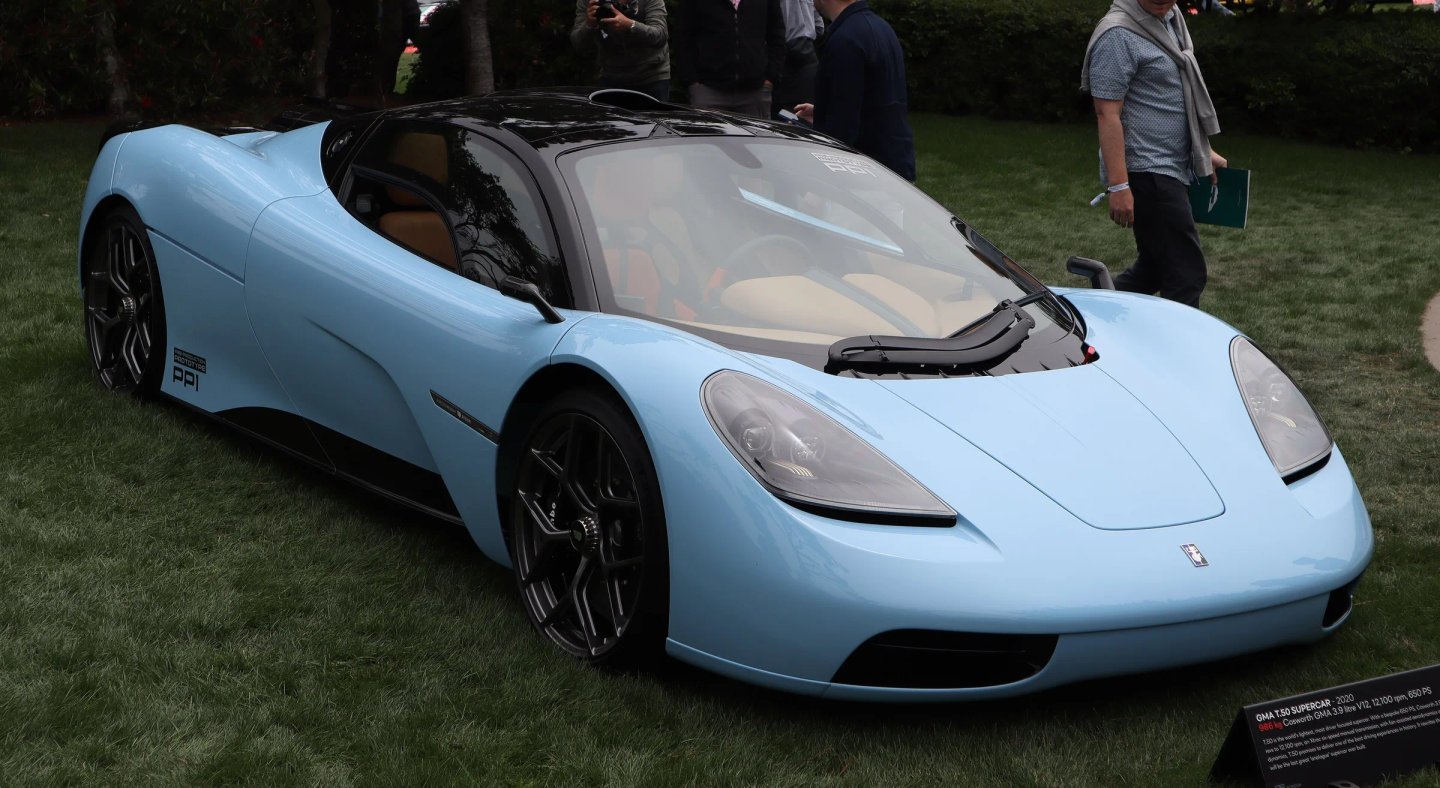
Take the Gordon Murray T.50. Murray presented it as the ultimate analogue supercar: 986 kg, 663 PS, a V12 revving to 12,100 rpm, a manual gearbox, no touchscreen, 100 customers and £2.36 million before taxes. The same car has a 400 mm fan at the back, six aerodynamic modes and ESP and traction control that can be switched off. Analogue here refers to the controls, to what the driver sees and touches. Even there, two small LCD screens flank the big rev counter. Beneath those controls, electronics are managing the air under the car.
The S/T is similar. The equipment list of one at a US Porsche dealer includes PASM and Power Steering Plus, which means electronically adjusted dampers and assisted steering. That does not make it a worse car, but it does make the word elastic.
Mechanically analogue used to be something else, and far cheaper. The 1996 Lotus Elise weighed 725 kg at its lightest quoted figure, made 120 PS from a 1.8-litre Rover K-series and cost about £19,000 at launch. The first series had no ABS. The S/T, the lightest car of the 992 generation, weighs 655 kg more. Nobody paid extra for what the Elise lacked. It just was not there, and the car was light and affordable.
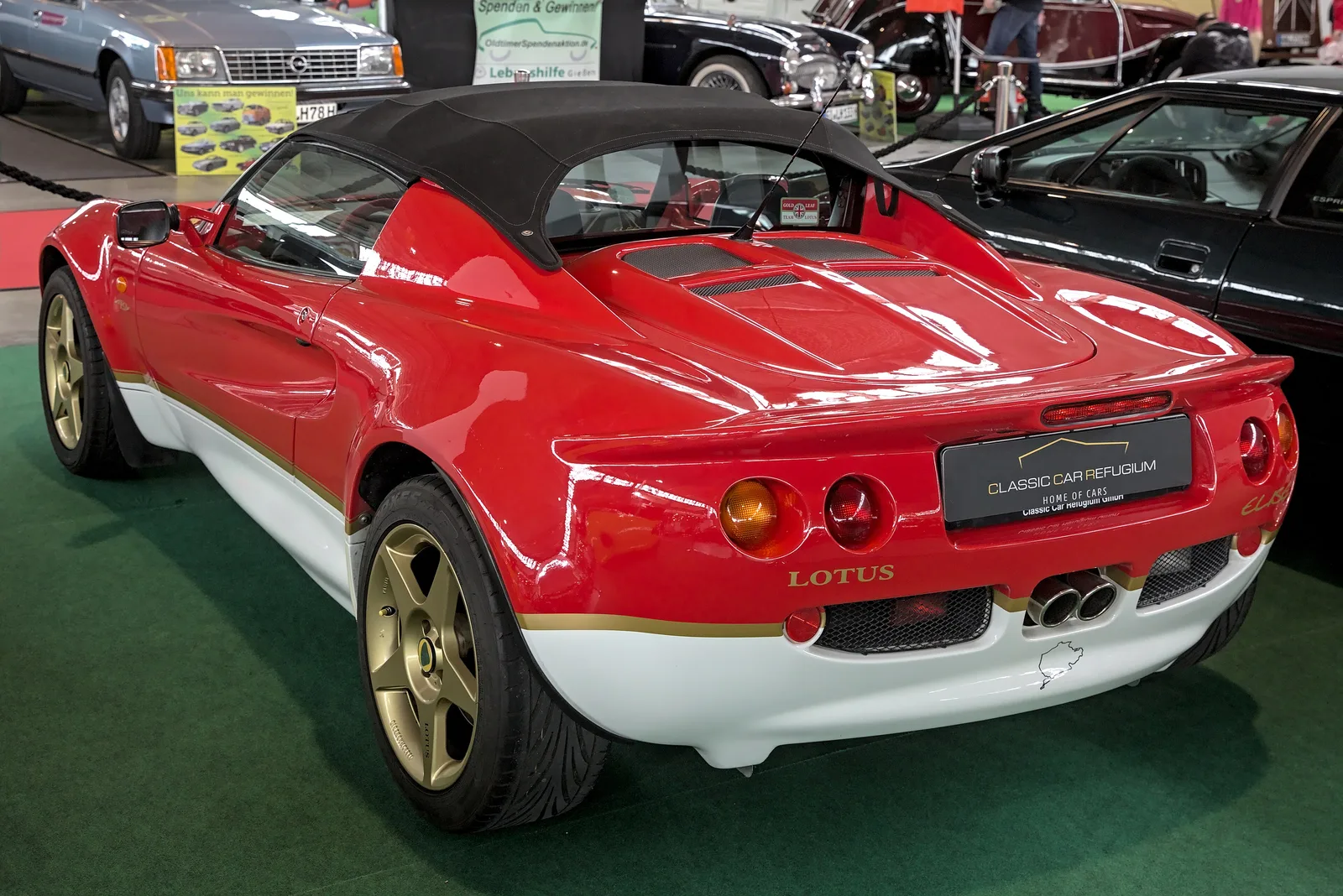
A first-series Lotus Elise at Retro Classics in 2023.
A word that needs an opposite
There is a reason this word earns money now. Linguists call it a retronym: a new name for something old, because something else has appeared beside it. The acoustic guitar was just a guitar until the electric one arrived. A car without a screen needed no name until nearly every car had one. The Elise was a light Lotus.
So the value of the word is not in the car itself. It lies in the difference from the cars around it. The more an ordinary 911 takes over, the more a buyer will pay to do the job themselves. And a difference can shrink from either side.
How feel differs from a word
Feel leaves traces you can measure: kilograms, rotating mass, gear ratios. On the S/T they are in the press kit and they are real: nearly 40 kg is 2.8% of a GT3 Touring. A word leaves no traces. So with any car called analogue there is one question to ask: what is physically different from the version next to it, and how much does that weigh? A dial instead of a screen is a real choice, but it changes nothing about what the car does.
What the word is worth later cannot be read from one figure. On Bring a Trailer, S/Ts went for more than £460,000 in early 2026, The Classic Valuer reports, about double their price new. RM Sotheby's estimates one with 1,260 km at €300,000 to €350,000 for its Munich sale on 20 November 2026, without reserve. That is roughly what it cost new with more than €30,000 of options. An estimate is not a result, but a premium that varies this much is no fixed property of the car.
This has a consequence for whoever buys the next one. If analogue lives in the controls, any manufacturer can supply it, because dials and switches do not need a new platform. Ordinary cars are already heading that way. In its 2026 protocols Euro NCAP rewards physical controls for indicators, hazard lights, wipers, horn and SOS. Its testers praised the controls of the BMW iX3, an electric SUV. The kilograms are harder, since they cost carbon fibre and development money. So expect more cars with this word and little scarcity in the word itself. Lotus had built 35,124 Elises when production ended in 2021. The first series still has no ABS.
Images: GMA T.50 at PB 2022 by Prova MO (CC BY-SA 4.0); Porsche 911 ST, Auto 2025, Zurich (20251029-P1074413) by Matti Blume (CC BY-SA 4.0); Lotus Elise (Series 1) 1X7A6612 by Alexander-93 (CC BY-SA 4.0). Images resized.


