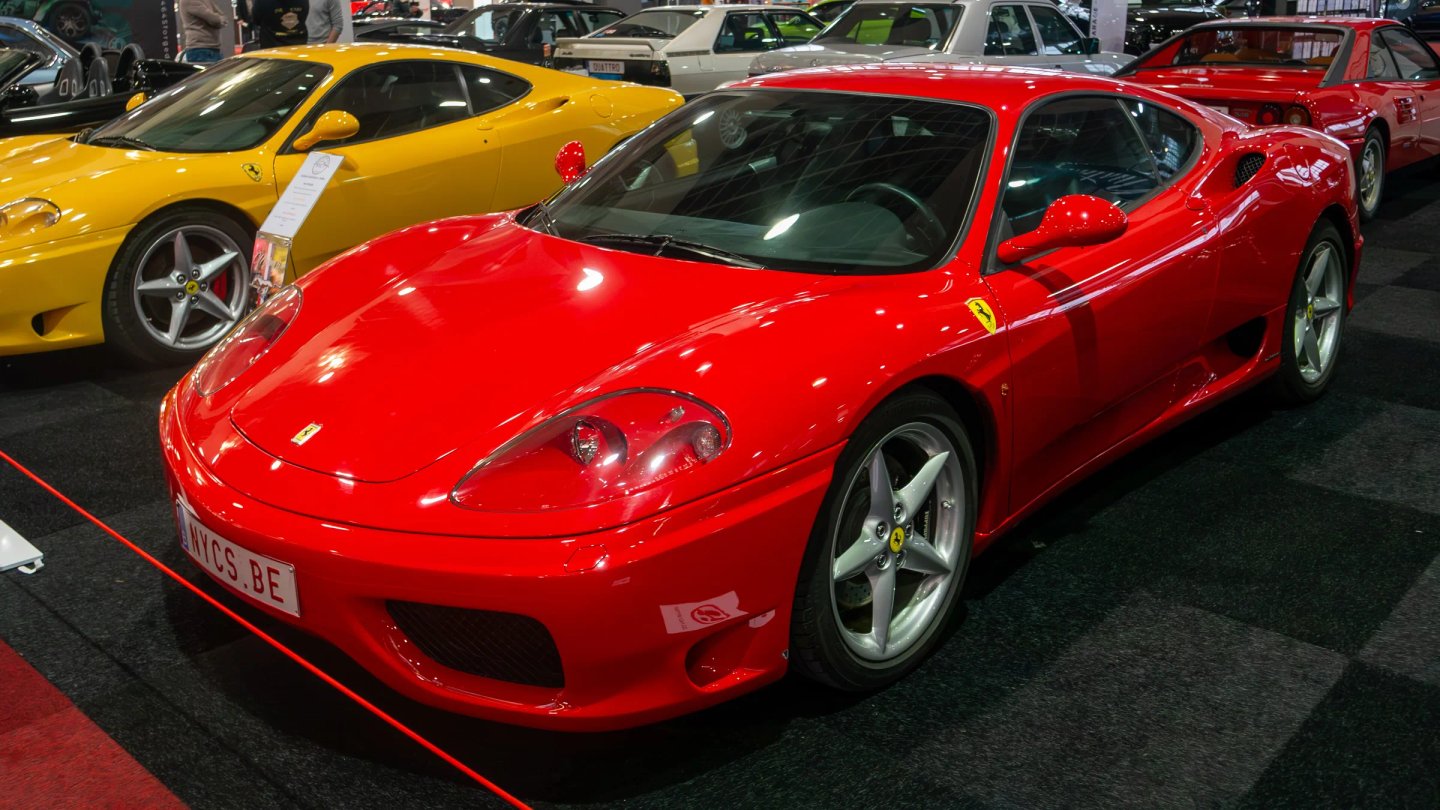
In November 2021 a share in a Ferrari 360 Modena cost £77. The British platform The Car Crowd was selling them, Hagerty reported. Cars there are typically split into 1,000 shares, which put this 360 Modena at about £77,000. For that a buyer got a slice of the eventual proceeds and a vote on when to sell. They did not get to drive it. The two leading platforms, The Car Crowd and Rally in the United States, did not allow that, according to the same article.
An investor in a Peugeot 205 GTi told Hagerty: "It doesn't matter that we can't drive the car." As far as pleasure goes, that is their own business. As far as return goes it does matter, for a reason that is less obvious.
What an owner gets and a shareholder does not
Someone who owns a classic gets two things. One is the change in price, which they see only when they sell. The other is the use, which arrives every year: days behind the wheel, the car in their own garage. Economists who study collectibles treat that second thing as a kind of return. In 2009 Benjamin Mandel used it in the American Economic Review to explain why art earns so little for the risk it carries: the owner is partly paid in something other than money. Elroy Dimson and Christophe Spaenjers wrote of stamps, art and violins that such purchases can be rational for people who enjoy owning them, even when financial assets offer more for the risk.
That has a consequence for price. A buyer who gets use every year will accept less capital gain than one who gets nothing, so they can bid more. If enough of those buyers take part, the use is built into the market price. That is also the price a platform pays when it buys the car.
So the shareholder is paying for a dividend they do not receive.
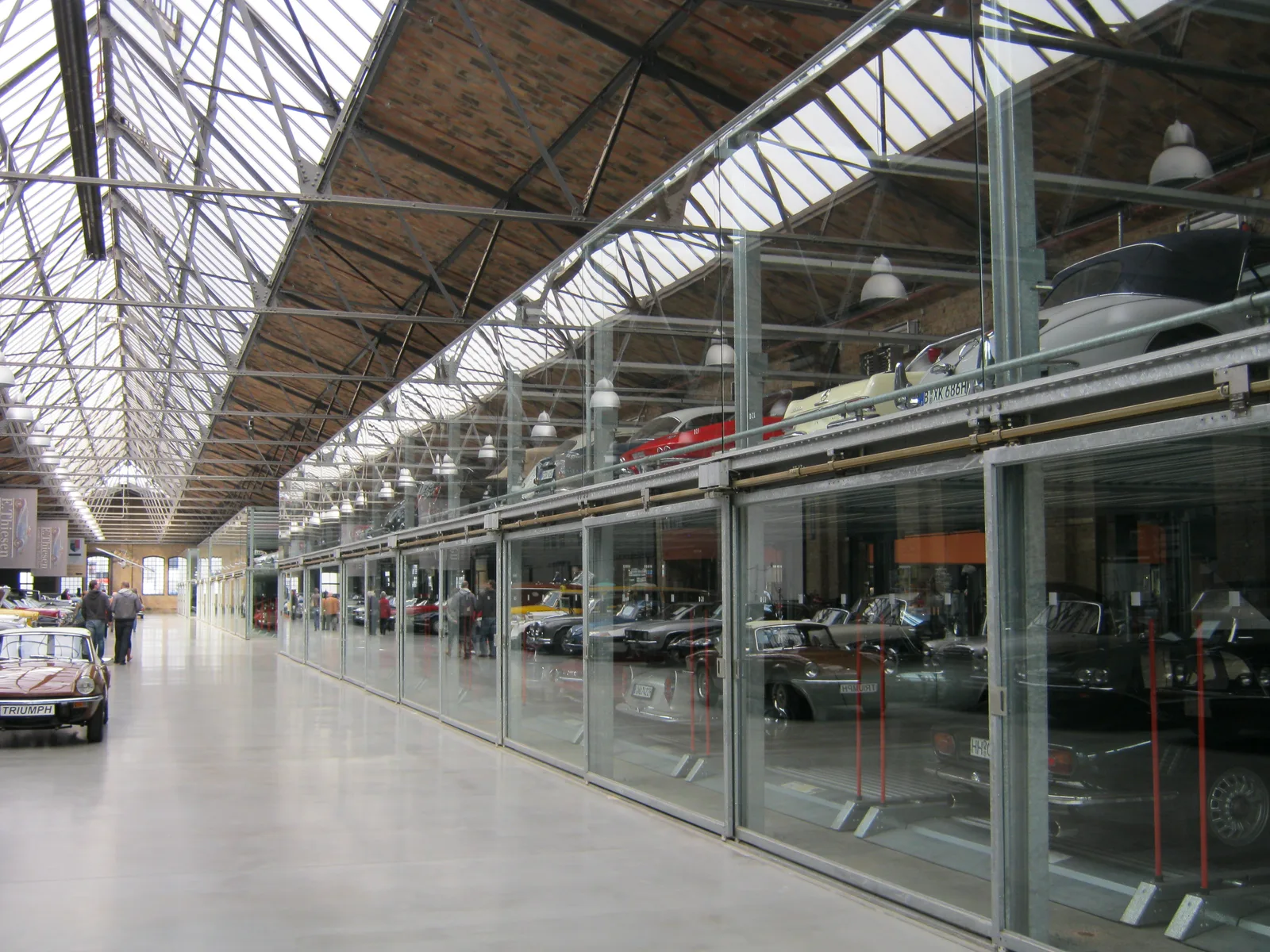
Cars behind glass at the Meilenwerk in Berlin, now Classic Remise, in March 2011.
One car, two returns
Here is a sum, on assumptions we chose ourselves. A car costs €100,000 and rises 5% a year for five years, to €127,628. Storage, insurance and servicing cost €2,000 a year. The owner drives it and reckons that driving is worth €4,000 a year. That makes €27,628 of gain plus €20,000 of use minus €10,000 of costs. It comes to €37,628 on €100,000, or about 6.6% a year.
The shareholder buys the same car at the rates Hagerty recorded in 2021. The share price includes 5% to 10% for selection, transport and marketing, here 7.5%. Up to another 10% covers five years of storage and upkeep. On sale the platform keeps 10% of the appreciation. So they put in €118,250 (€107,500 plus €10,750) and get back €124,865 after €2,763 is deducted. That is 1.1% a year.
Part of that gap is costs and part is use. On one point the sum flatters the owner: their storage and insurance cost more than a warehouse pays, and mileage can pull the sale price down. Allow for that and the 6.6% drops. The 1.1% stays where it is.
They would never have bought the Ferrari anyway
The obvious objection is that this investor could never have afforded a Ferrari, so they are giving up no driving at all. True. But then their alternative is not the Ferrari. It is an index fund, and that comparison is no kinder. A share in a company stands for profit and a share in a property fund for rent, and money comes out along the way. A car pays almost nothing along the way. It can be hired out for shows and filming, and Hagerty worked out that a 10% holder gets £25 from a £250 appearance. At one share in a thousand, that is 25 pence.
The Car Crowd seems to see this too. A July 2025 piece in WealthBriefing lists, among the services clients can choose, driving the car as much or as little as they like. It does not say how that works for someone with a small stake in a syndicate. Still, what was ruled out in 2021 is now on offer to at least some clients.
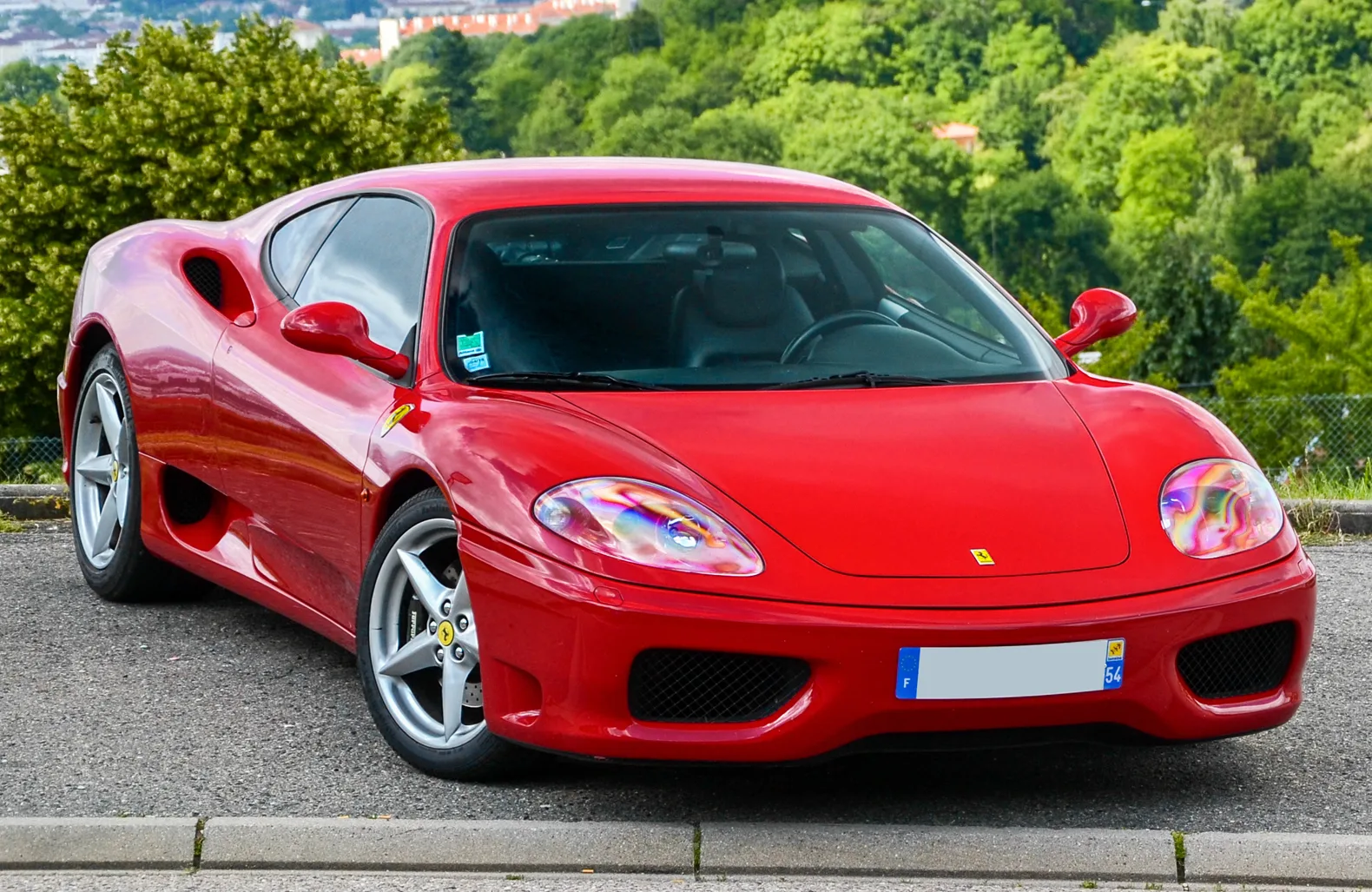
A Ferrari 360 Modena in France. Not The Car Crowd's car, but the same type.
Everything rests on one sale
With nothing coming in along the way, the whole value of the share sits in one moment: the day the car changes hands. The platforms try to soften that. In 2021 The Car Crowd had cars valued every six months and let shareholders vote on holding or selling. It also announced a bulletin board where they could offer their shares. A Berlin rival advertises trading between investors. But a valuation is not a bid. And a bulletin board works only while another shareholder wants to buy.
The Car Crowd reported returns of 15.8% for 2023 and 12.7% for 2024, in a collector car market that the same article says shrank by about 6%. Those are the company's own figures. How much of that is cars sold and how much is valuation, the piece does not say. Rally reports sale prices per car in filings to the US regulator. For this company we found no such list.
The holding period is usually three to five years, according to WealthBriefing. The final buyer is someone who wants the car, which mostly means someone who wants to drive it. Their bid settles the matter for a thousand shareholders at once. If that moment falls in a weak market, an owner can wait. They keep receiving what they always received and drive until prices come back, or until they stop caring. The shareholder can vote to wait as well. But they receive nothing, and the storage keeps running. A fee for five years covers five years. After that comes a new bill, or a sale at the wrong moment.
Images: Ferrari 360, BAS 24, Brussels (P1170344-RR) by Matti Blume (CC BY-SA 4.0); Autos hinter Glas im Meilenwerk März 2011 - panoramio by Sören Kusch (CC BY-SA 3.0); Ferrari 360 Modena - Flickr - Alexandre Prévot (26) (cropped) (cropped) by Alexandre Prévot from Nancy, France (CC BY-SA 2.0). Images resized.


