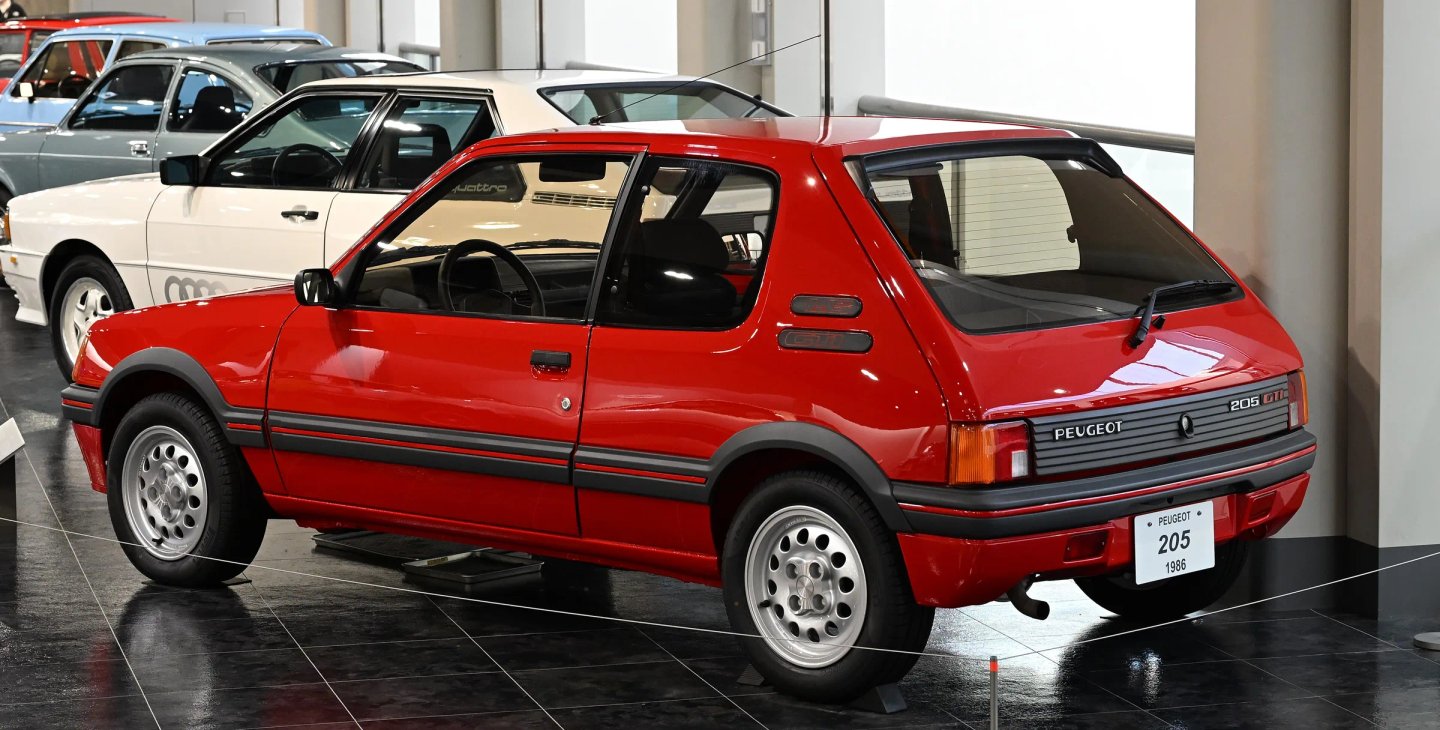
Peugeot built about forty times as many 205 GTIs as Ferrari built 328s. Depending on the source that is 294,514 or 332,942 Peugeots, against 7,412 Ferraris. On 3 November 2026 the Dutch vehicle register listed 182 cars with 205 GTI in the name and a valid roadworthiness test. For the 328 it was 85. Forty to one has become a little over two to one.
That count is rough. Of the 121 Ferraris on the register, the dates show only 24 getting a Dutch plate within about a year of first registration, so many arrived later as imports. And 312 of the 613 registered Peugeots have a test certificate that ran out more than ten years ago. What became of those cars is not recorded.
British figures point the same way. At the end of 1994, 49,981 Peugeot 205 GTIs were taxed for the road in the UK. By mid-2026 it was 1,161, plus 5,477 declared off the road under SORN. Together that makes 6,638, or 13% of the 1994 number. Even that is generous, because such a declaration can belong to a running car in a barn or to a pile of parts.
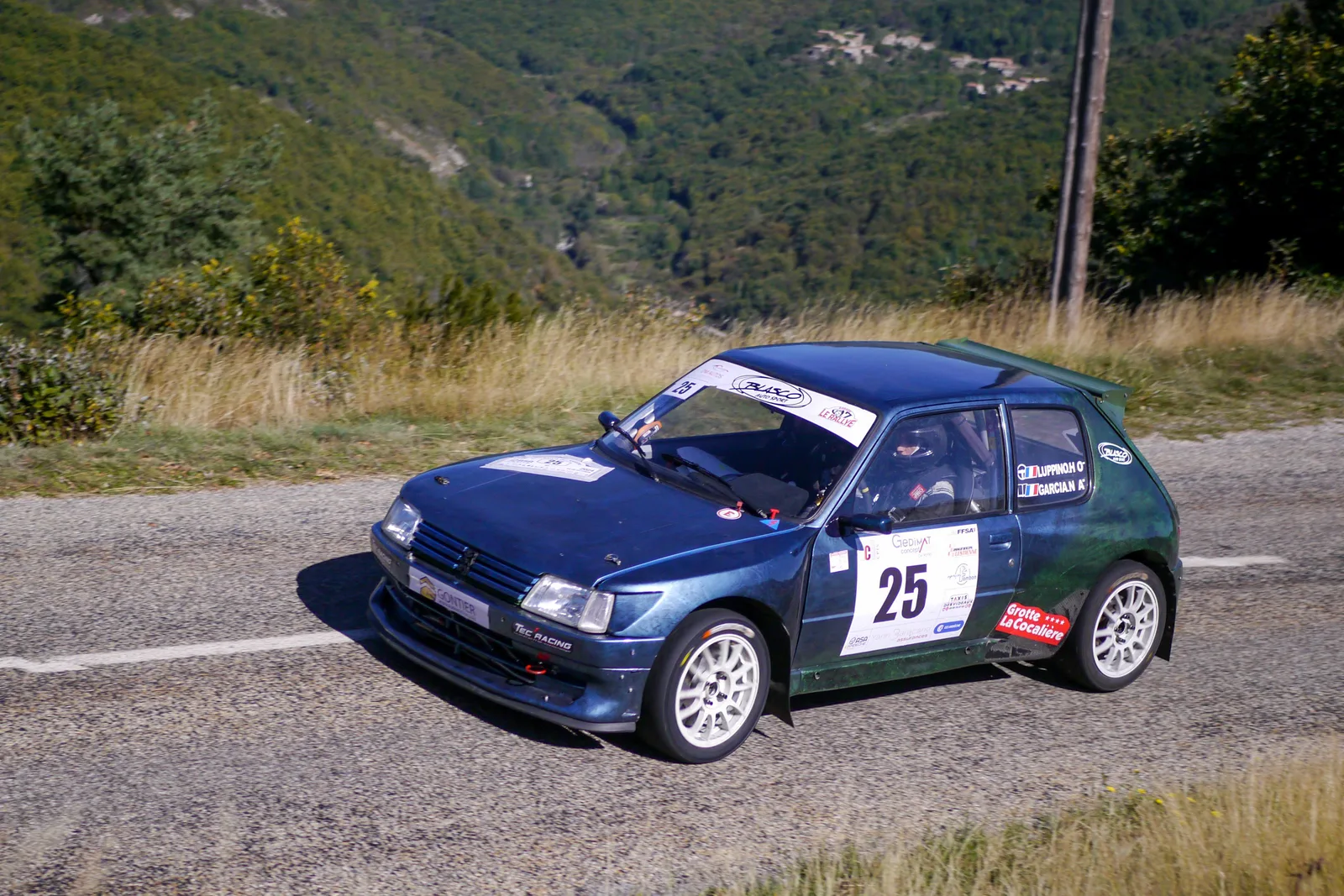
A 205 GTI on the 2024 Rallye de l'Ardèche, a long way from how Peugeot delivered it.
Two ways to become scarce
The first is scarcity by decision. A manufacturer builds 500 and says so. The number is known on the day of the announcement, so every buyer can put it in their bid. The premium gets paid up front.
The second is scarcity through use. Here the number is settled decades later, as the sum of tens of thousands of decisions by owners who were not thinking about what the car might be worth in thirty years. The 205 GTI is the textbook case. It was cheap enough to use every day and good enough that people did. It got stolen: the British insurer Lancaster writes that in the era of boy racers and joyriding it was such a favourite target that premiums went through the roof. We found no count of how many were crashed. On a car worth little, a solid accident is soon a write-off. Then it has gone without anyone having given it a thought.
Who paid and who sold
Economists call this a positive externality: someone does something for their own reasons and another person benefits without paying for it. Every 205 GTI that disappeared made the remaining ones slightly scarcer. The owner who put it into a tree got nothing for that. It resembles a company buying back its own shares, except that the shareholder handing in the certificate also pays for the privilege.
The money turns up somewhere else. On 25 April 2022 Aguttes in France sold a 1987 205 GTI 1.9 with 6,928 km for €82,960, which Hagerty put at nearly £30,000 above the previous record. Its first owner kept it for 22 years. A family member inherited it and did not drive it. Aguttes had sold the same car in 2019, for just under £40,000, and in the three years after that it covered 209 km. None of those owners created the scarcity. They just did not take part in what everybody else was doing.
That figure says little about an ordinary 205 GTI. Hagerty called it a French bubble and had the best British 1.9 in its price guide at £27,300. Lancaster put a decent GTI at £5,000 to £8,000 in November 2021, and a good low-mileage one at £12,000 to £15,000. Most survivors have been used, and the price shows it.
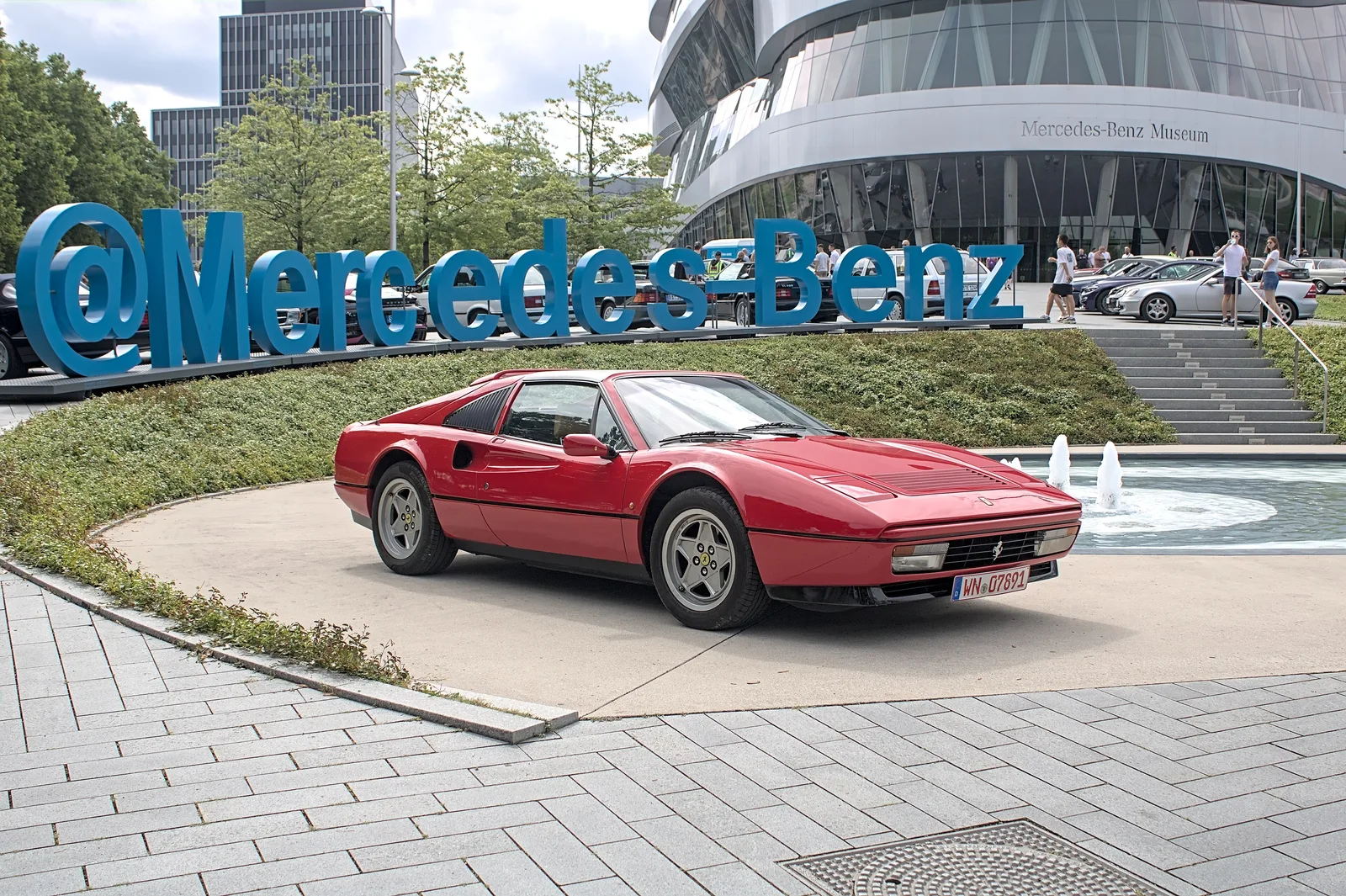
A Ferrari 328 GTS. For each one built, Peugeot built about forty 205 GTIs.
Scarcity alone does not explain it
The objection is obvious: the ordinary 205 vanished far faster. The same British table lists the 205 XS, with 17,188 on the road at the end of 1994 and 375 in mid-2026, of which 66 are taxed. That is 2%, against 13% for the GTI. The XS is scarcer, yet the auction news is about the GTI. Lancaster even called the GTI's survival rate high in 2021, and for a cheap car from the 1980s that is fair.
So something else is needed. Chris Hughes of the Peugeot Sport Club UK gave Hagerty the explanation in 2022: people who wanted one in the 1980s and 1990s can now afford one. There are a lot of those people, because so many of the cars were around. The large number and the small number belong together. Some 300,000 cars made the buyers, and the same use that made the car wanted took it off the road.
Even then the count is not what the buyer is after. They want a 205 GTI that has not been lowered, resprayed or given another engine. No register says how many of those exist. The Dutch register counts plates and the British DVLA counts tax declarations. The real scarcity sits in a number nobody knows, which may also explain why prices spread so far apart.
Why this cannot be repeated on purpose
This is where it reverses the investment car. Someone who buys a 328 and looks after it is doing what the other owners do. Those cars go on existing. Had every 205 buyer in 1988 treated their car that way, there would now be some 300,000 well-kept GTIs and no record.
So the keeper earns only because the others did not keep, and cannot know in advance whether they will. Anyone buying a small sporty hatchback today to put in a barn is betting on what the other buyers do. The more of them think the same way, the worse the bet gets. That is an opinion, not advice to buy or not to buy. With a youngtimer already thirty years old, you can at least count what is left.
One row in the Dutch register does not fit this story of keeping and disappearing. A 205 GTI, first registered in January 1994, six cylinders, 2,946 cc. That is the capacity of the V6 in the Peugeot 406 Coupé, though the register does not say what is actually in there. It weighs 1,000 kg empty, is insured and has a test certificate until January 2028.
Images: 1986 Peugeot 205 GTI rear by TTTNIS (CC0); Peugeot 205 GTI - ES5 Rallye de l'Ardèche 2024 by Kakoula10 (CC BY-SA 4.0); Ferrari 328 GTS IMG 0200 by Alexander-93 (CC BY-SA 4.0). Images resized.


